


When a bird appears somewhere it has no right to be, the birding community experiences a certain kind of excitement. A Maine coastal Siberian thrush. A Steller’s Sea-Eagle, which has a wingspan of up to eight feet and is native to Russia and Japan, is straying through Alaska before descending into the lower 48. Something changes when word spreads. People begin looking up the cost of flights. Small towns experience a sudden shortage of hotel rooms. On weekends, gas stations receive more customers than they do in a normal month.
Most people outside of the birding community are unaware of how big the vagrant bird economy is.
Approximately 45 million Americans engage in birdwatching, which is already a significant industry in the country and generates an estimated $41 billion in travel, equipment, and tourism revenue annually. However, there is a smaller, more focused engine within that figure: the search for mega-rarities, also known as vagrants—birds that are so far outside of their typical range that seeing one can seem almost cosmic. These are not merely peculiar birds. These birds are either wrong-hemisphere or wrong-continent birds that arrived due to a freak wind pattern or navigational error and chose to stay for a few days or weeks.
One such incident was given a monetary value in a 2023 study that was published in People and Nature. Researchers calculated that a Steller’s Sea-Eagle’s economic activity during its months-long drift across multiple states in North America was between $380,000 and $732,000. One bird, which most likely had no idea it had become a local economic stimulus, is responsible for hotel stays, restaurant meals, car rentals, and guided tours.
It’s difficult to fully explain to someone who hasn’t experienced it what motivates people to put in this much effort. However, there is a peculiar sense of urgency because of the fleeting nature of the thing—the knowledge that the bird might disappear tomorrow. The “draw and decay” of rare bird events—the spike in birder activity after a rarity report, followed by a gradual tapering as the bird moved on or just became harder to find—was observed in a 2021 peer-reviewed study using ten years of eBird data.
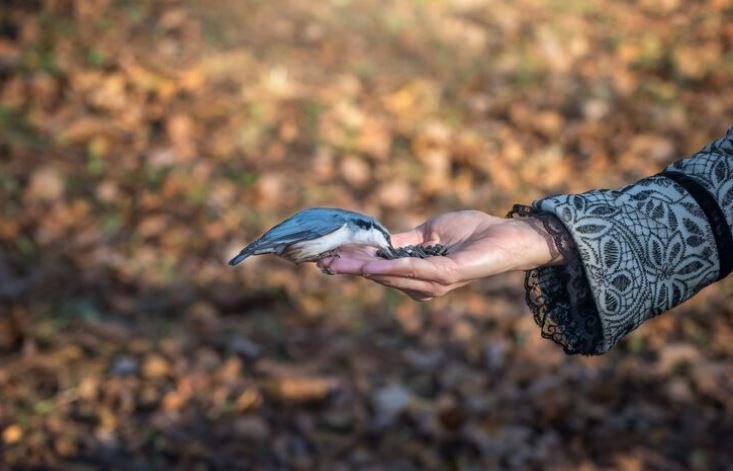
Dramatic draws are possible. When a Whiskered Tern was spotted in Cape May, New Jersey, in 2014, the number of eBird checklists there increased to 161 in a single day from a baseline of about 32. People arrived swiftly, traveled great distances, and spent money while they were there.
It’s interesting to note that one of the best indicators of how many birders a rarity would draw was its proximity to a small regional airport. It’s a minor international center, not a major one. When you consider it, it makes sense: the birders who are most likely to pursue are seasoned, mobile, and prepared to connect via a regional airfield in order to get to a remote location. Southern Arizona, coastal Texas, and the Rio Grande Valley are not places that people happen upon by accident. With binoculars already in the bag, they purposefully fly in, frequently on short notice.
The total annual economic impact of vagrant-chasing across the nation is still unknown. The majority of spending occurs in cash-economy ways, such as lodging, dining, and fuel, which don’t always fit into neat economic reports, and the data is dispersed. However, each case study is sufficiently suggestive. When a single bird brings in hundreds of thousands of dollars over the course of several months in one area, and similar incidents occur dozens or hundreds of times annually throughout the nation, the numbers mount up in ways that call for greater attention.
Beneath all of this is a conservation dimension. In citizen science initiatives like eBird, birders who pursue rarities are typically among the most involved and data-savvy participants. They add to the body of observational data that researchers use to monitor population trends, migration patterns, and the general health of bird communities because of their compulsive checklist-keeping and willingness to record precisely what they saw, where they were, and when.
Since 1970, an estimated three billion birds—nearly one-third of all birds—have disappeared from North America. In light of this, vagrant-chasers’ attention to particular places and sightings isn’t merely a peculiarity of their hobby. This type of distributed monitoring is primarily driven by the same restless energy that prompts someone to reserve a red-eye flight to south Texas due to the sighting of a Siberian bird in a salt marsh.
Observing all of this gives me the impression that the ecology and economics are more intertwined than they initially seem. A lost bird ends up in an unexpected place. Birding forums and eBird alerts allow word to spread within hours. People show up. Local companies gain. Data is captured. And that bird, oblivious to everything, either stays a few more days in the marsh or the scrubland or silently departs.
