


Something amazing is taking place in the treetops deep within the forest corridors of Mindanao, the second-largest island in the Philippines and one of Southeast Asia’s most biologically rich but least researched regions. The birds are singing. They’re not all singing the same song, though.
This may seem apparent. Different songs for different species. However, that isn’t exactly what field observers and researchers have been discovering. Birds of the same species are making vocally different calls when they are separated by a river, a ridge, or a few kilometers of dense canopy. Basically, local accents. Additionally, it becomes stranger and more fascinating the more attention it receives.
Bird song dialects have a long history in science. Decades ago, it was discovered that White-crowned Sparrows near the Golden Gate Bridge in San Francisco spoke over ten different regional dialects in North America; a sparrow singing in one park would sound noticeably different from another a few miles away. This is culture in the strictest sense, according to ornithologist Donald Kroodsma, who has devoted much of his professional life to studying birdsong: “learned traditions passed from one generation to the next.” Males learn songs from their fathers and neighbors, and little changes add up over time to create something unique and regional.
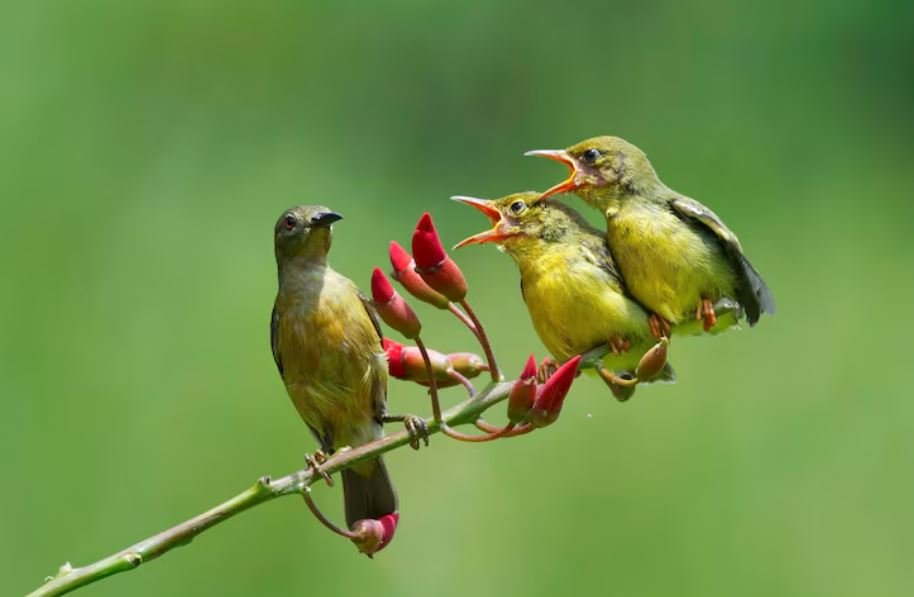
Apply that reasoning to Mindanao, where numerous bird species are virtually isolated from one another due to elevation, forest fragmentation, and geographical barriers that have mostly persisted for centuries. By almost all scientific standards, the conditions for dialect formation are perfect.
A postgraduate researcher in the Philippines is concentrating on the bioacoustics of native Philippine birds, observing how individual calls and songs differ both within and between species. It’s laborious work. When compared to recordings from a forest block thirty kilometers away, field recordings made in one barangay may sound nearly unrecognizable. In a very real sense, the birds are conversing in regional languages.
The extreme topography of Mindanao, which includes isolated highland plateaus, river valleys, and mountain ranges, may have produced what biologists refer to as “acoustic islands.” The endemic songbirds of Mindanao may have been quietly and unnoticed by humans for generations, much like the chickadees that lived west of Oregon’s Cascade Mountains developed their own cascading whistles that completely disappeared on the other side of the range.
What this suggests about survival is what elevates it above mere scientific curiosity. Loss of habitat affects more than just trees when a bird’s song is unique to the local population and the dialect is, in a sense, the community. Whole vocal traditions can be destroyed by it. Birds are not the only species displaced by a forest patch cleared for agriculture. A certain dialect that is unique to Earth might be silenced. Even though it’s difficult to measure, there’s something sobering about that.
In other parts of the world, researchers studying bird dialects have discovered that urban noise is driving some species to sing louder, more uniform songs, thereby flattening the regional accent in the name of being heard. The interior forests of Mindanao have mostly escaped this strain, but logging and agricultural encroachment are altering the acoustic environment in ways that are still unclear.
The resources for researching all of this have significantly improved. These dialects can now be meaningfully documented, compared, and tracked thanks to techniques like crowdsourced recording databases, bioacoustics mapping, and AI-assisted sound analysis that were nonexistent ten years ago. With a good field recorder and a well-organized observation plan, a researcher can add to a body of information that may one day explain not only how these birds sing but also why their songs vary and what those variations mean for population relationships across fragmented habitats.
Speaking with those who work in this field gives me the impression that Mindanao’s forest soundscape is one of Southeast Asian biology’s most neglected archives. For a very long time, the birds have been singing their native songs. Before those voices begin to fade into a kind of silence that doesn’t reverberate, the question is whether enough people will pay attention—carefully enough and quickly enough.
