


In Orkney, there is a particular type of morning when you don’t anticipate seeing anything unusual: flat grey light, salt on the wind, and the bog stretching out like a wrinkled blanket. Nevertheless, someone did in 2019. A butterfly with commas. Ember and cinder-colored wings with ragged edges and enough delicacy to look like an error. One tiny insect, out of its proper place. It didn’t make headlines around the world. However, it was quietly significant to those who keep a close eye on these things.
Animals that appear outside of their typical range are referred to as “vagrant.” It is derived from the Latin for roving and lacking a permanent residence. In the past, it meant a singular occurrence, such as a moth that followed a weather system from Spain, a turtle carried north by a warm current, or a bird blown off course. No one anticipated their stay. Most did not live long enough to give it a shot.
However, something has altered. The anomalies are turning into patterns, which are becoming more difficult to overlook.
Because they are easy to spot and react quickly to temperature changes, butterflies are a good place to start. For many years, the comma butterfly was only found in southern England. It had moved north past Edinburgh by the 1990s. The species had already colonized large areas of Scotland that it would never have reached a generation ago by the time that lone individual appeared on Orkney. One butterfly might not make a difference. However, it’s equally possible that it was a pioneer, which is what draws naturalists’ attention. Before the colony, there was one scout.
This northward drift is not unique to the comma. Once found only in the edges of English woodlands, the speckled wood butterfly has been gradually making its way back to Scotland for years. Hampshire has seen the emergence of damselfly species that are native to the French coast. Spending a summer circling the gannetry at Bempton Cliffs, a black-browed albatross, a bird that breeds in the southern oceans and has no real reason to be anywhere near Yorkshire, attracted crowds who stood on the cliff edge to watch it ride thermals with an ease that seemed almost disdainful. The next year, it returned. It appears that some things are similar to what they discover here.
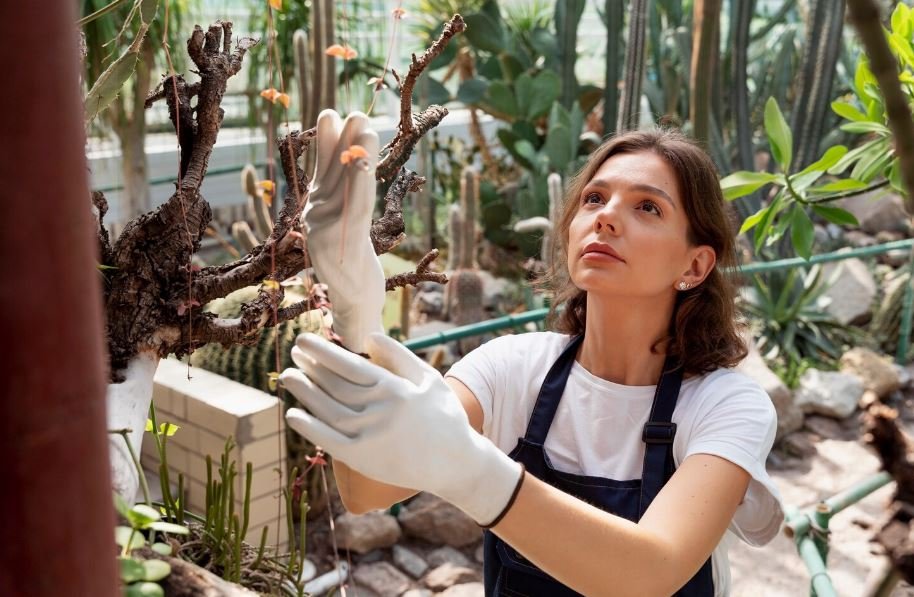
Perhaps more so than the animals, the plants are also moving. Hardy bananas and rice paper plants are being grown outdoors by gardeners in Harrogate, in northern England, which isn’t exactly known for its Mediterranean warmth.
Those plants wouldn’t have survived a Yorkshire winter a few years ago. Chinese dates and watermelons are being harvested by amateur growers in East Anglia. Botanists at Kew Gardens have discovered avocado trees growing in London; some have sprouted from abandoned seeds, while others have withstood temperatures that would have killed them. The direction of travel has been bluntly stated by the Royal Horticultural Society: warmer and drier summers, wetter winters, and conditions that increasingly favor plants from further south.
People seem to be unsure of how to react to all of this. Ecologists are cautious when speaking, making a distinction between the beneficial range expansions of endangered species and the possible disruption brought about by unprepared newcomers entering ecosystems. It’s endearing to watch a walrus pull itself onto a Welsh lifeboat ramp. It is much more difficult for a cascade of non-native insects to colonize areas where native food chains evolved without them.
There is more than one direction of movement. Some of the most well-known species in Britain are quietly struggling, while exotic arrivals make for dramatic headlines. In 2022, Atlantic salmon populations fell to all-time lows. If the distribution of plankton changes, basking sharks might be forced out of UK waters. As the North Sea warms, seabirds that breed on Britain’s cliffs are losing the sand eels they depend on. There’s more to the shuffle than what’s coming. It’s about things that are disappearing, fading, or not coming back in spring the way they used to.
If the comma butterfly in Orkney symbolizes anything more than a single insect having an exceptionally long day, it symbolizes a world in motion. Ranges are growing. The barriers are becoming softer. The distinctions between species that were neatly categorized into their respective climate zones for centuries are becoming less clear. A disproportionate amount of what is being released is being caught in Britain, which is located where the Atlantic meets the European landmass.
Whether the majority of these newcomers will eventually settle, prosper, or quietly disappear is still up in the air. The albatross might cease coming back. Orkney’s comma colony might never come to pass. However, it’s difficult to ignore the fact that the record is growing as you watch this accumulation of sightings, season by season. These are no longer isolated oddities. When combined, they appear to be something of a trend.
