


Somewhere in the American West, a peregrine falcon nest that had been active for years is abandoned along the edge of a remote canyon. No pair circling overhead at dusk, no eggs, no chicks. The absence was quietly noticed by the rangers who were keeping an eye on it, much like when you notice a stopped clock. At first, there was no alarm, just a sense that something wasn’t right. It’s the kind of disappearance that goes unreported. However, it fits a pattern that investigators have been following for many years.
The illicit trade in raptors, including gyrfalcons, hawks, and falcons, is not new. When people examine it closely, they are surprised by how persistent it is. On the illicit market, live eggs of some species have fetched up to $100,000 each. A tiny but extremely wealthy group of collectors and falconers, especially in the Middle East, have reportedly paid upwards of $400,000 for wild-caught falcons. The trade is purposefully difficult to track, and those figures are challenging to confirm. However, the supply chain appears to pass through some of North America’s most striking and protected landscapes, such as the American West’s mountain ranges and canyon country, according to federal wildlife investigators, conservation researchers, and an increasing number of court cases.
The practice of falconry is long-standing and generally accepted. It was created over 2,500 years ago by Bedouin communities in the Arabian Peninsula as a means of survival, teaching migratory falcons how to hunt in one of the planet’s most hostile environments. It traveled the Silk Road, entered Aristotle’s writings and Marco Polo’s journals, and is now recognized by UNESCO as an Intangible Cultural Heritage of Humanity.
Captive-bred birds are used by the majority of falconers worldwide. After DDT almost wiped out the peregrine falcon in North America during the 20th century, conservation initiatives, some of which were started by falconers, helped bring it back. Serious practitioners take this genuine tradition very seriously.
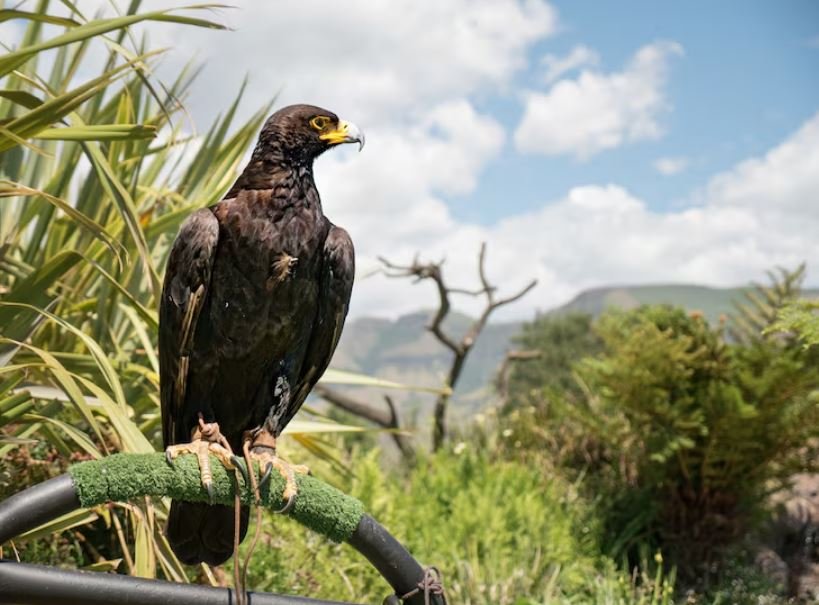
However, something else exists on the periphery of that tradition. There is a smaller, more difficult-to-reach market for wild birds and wild-taken eggs because some buyers think that a falcon raised in a breeding facility is inferior to one born in the cliffs and thermals of the wild. Although it’s not entirely proven science, this perception is probably more cultural than biological. It is evident that the high price consumers are prepared to pay for that wildness has been sufficient to support a black market for many generations.
Raptor poaching is a methodical process rather than a dramatic one. The clifftop or rocky outcrop locations where falcons return year after year to breed are known as established eyries, and nest raiders study them. Eggs must be transported within a certain developmental window in order to survive the journey. They may be wrapped in socks or tucked into specially made belts that are strapped under clothing, or they may be carried against a human body for warmth. The most well-known example of how this logistics chain truly works is likely the notorious case of Jeffrey Lendrum, a serial raptor poacher who operated across several continents and was apprehended at Birmingham International Airport with 14 peregrine falcon eggs taped to his abdomen. Its specificity is almost banal, which contributes to its unnerving quality.
The Migratory Bird Treaty Act and the Bald and Golden Eagle Protection Act, which govern wildlife in the United States, make it illegal to take, possess, or sell most raptors without the required permits. Operation Falcon in the 1980s was one of the largest early undercover operations carried out by the U.S. Fish and Wildlife Service to combat raptor trafficking. The agency is still looking into it. However, there are clear enforcement gaps in the vast, isolated, and understaffed western landscape. It’s possible that a large number of nest raids go completely unnoticed, with the lack of birds being simply explained by natural failure.
The demand appears to be more difficult to stop than the actual poaching. Wildlife investigators have observed that prosecution seldom occurs even when they gather information on end buyers, who are frequently connected to affluent falconry circles in the Gulf region. Accountability is hampered by jurisdictional restrictions, diplomatic complexity, and the social standing of purchasers in their home nations. It’s a persistent but subtle frustration that comes up in discussions with those who work in this field. The birds vanish. The eggs move. The purchasers are still anonymous. Additionally, another nest is waiting to be observed—or not—somewhere on the edge of a canyon in the west.
