


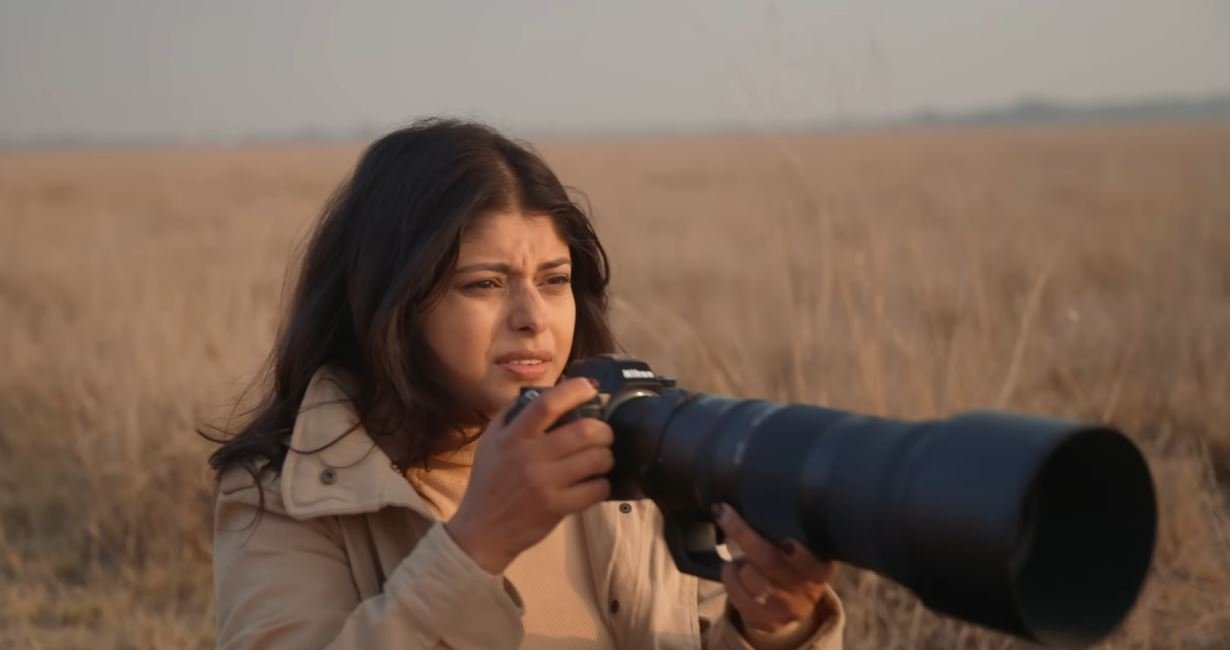
Every wildlife photographer has experienced the moment when a bird lands, the light is ideal, and the camera just can’t keep up. In just 0.5 seconds, the shot you envisioned is gone. It affects novices, enthusiasts, and sometimes professionals who tried their luck with equipment that wasn’t quite appropriate for the task.
It’s actually difficult to choose the best camera for wildlife photography, and the marketing jargon doesn’t help. Sensor size, burst rates, and megapixel counts are all important, but not always in the ways that manufacturers recommend. A few things quickly become apparent after watching seasoned field photographers and weekend birders struggle with their setups for a sufficient amount of time.
The most crucial feature is autofocus, and it’s not even close. Modest resolution is acceptable. A slower burst rate is manageable. However, nothing else you have paid for will save the shot if the camera is unable to lock onto a moving animal and track it consistently. The best mirrorless systems from Sony, Nikon, and Canon have advanced to the point where animal tracking and eye detection function almost uncannily well. For example, the Sony A9 III’s global shutter can capture 120 frames per second, which is actually more than most photographers will ever require.
The more practical question for the majority of people is where they feel comfortable falling on the budget spectrum. Professional cameras such as the Canon EOS R1, Nikon Z9, and Sony A1 II don’t offer much. With its 24.2-megapixel sensor, 40 frames per second bursts, and superb autofocus, the Canon EOS R1 is especially good at reducing camera shake while still capturing rapid motion. For many field photographers, the Nikon Z8 continues to be the most sensible combination of portability and capability, sitting just below flagship territory. With 45.7 megapixels and 20 frames per second in RAW, it’s a large camera without being heavy.
Though not for the reasons most novices believe, the megapixel discussion is worthwhile. Heavy cropping is possible with high-resolution files, which is crucial when your subject is 200 meters away and won’t come closer. However, camera shake is also amplified by higher resolution. The Sony A7R V’s 61-megapixel sensor creates stunning images, but at telephoto distances, any micro-vibration is visible in a way that a 24-megapixel sensor simply wouldn’t. Some photographers may purchase resolution that they are unable to fully utilize in the field.
Additionally, in serious discussions about wildlife photography, the APS-C option is not given enough credit. A built-in reach advantage is provided by cameras like the Nikon Z50 II and the Canon EOS R7. The crop factor essentially multiplies your focal length, bringing you closer to the action with shorter, lighter, and significantly less expensive glass. This is more important than it may appear on paper for anyone who isn’t prepared to spend money on 500mm or 600mm prime lenses.
Used DSLRs are still a viable option if money is tight and mirrorless seems unattainable. For photographers who know how to push them, bodies like the Nikon D500, which is arguably the best APS-C DSLR ever made, still hold up surprisingly well for wildlife. Although they won’t have the contemporary eye-tracking systems, they are weather-sealed, fast enough in most circumstances, and can be found on the used market for a small portion of their original cost.
To put it simply, the camera body is just one aspect of the problem. The sensor behind it frequently has less of an impact on the shot than the lens attached to it. However, that is a completely different and costly discussion. Understanding what you’re really asking the camera to do and then selecting a body that can meet those demands without making you wish you had made a different decision the first time you’re standing in a field at dawn, waiting for something to move, is, for the time being, a more honest place to start.
