


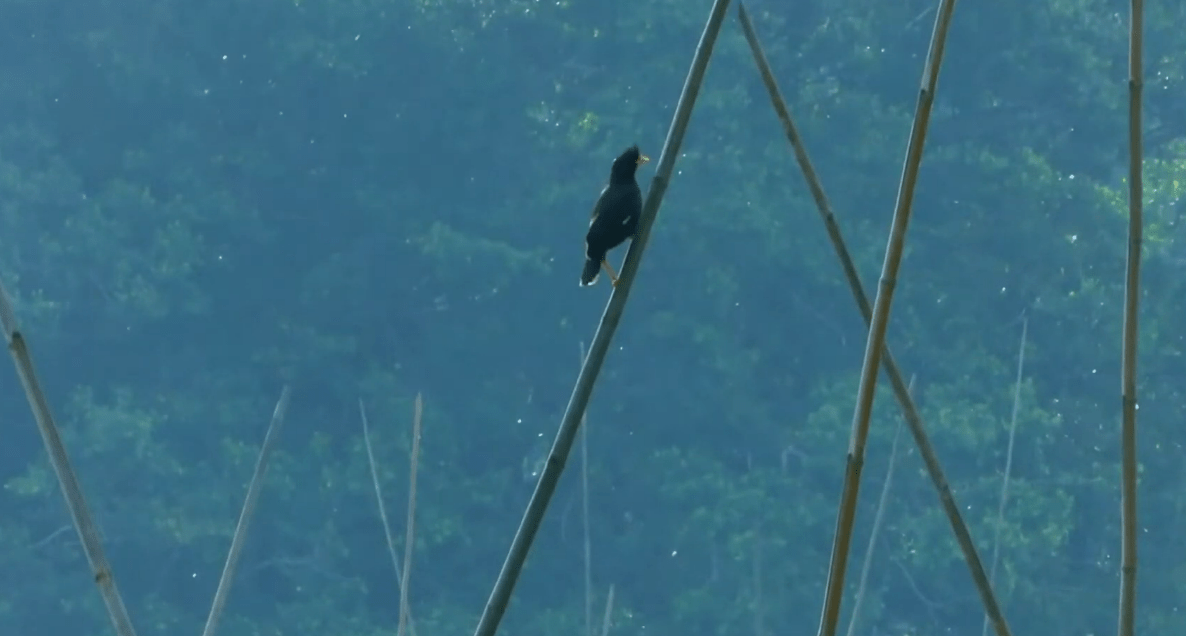
Most people wouldn’t be able to name this bird, but they would definitely know what it is if they saw it. The crested myna has a look that stays with you. Its face is jet black, small, and shaped like a question mark with a small bristly crest rising from its forehead. It has more than one name. One is the Chinese starling. People in the Philippines call it “Martinez,” which seems oddly personal for a wild bird, as if it got the name by showing up in the same neighborhood over and over again without being invited.
Acridotheres cristatellus is the scientific name for it. It is a starling species that was put in the genus Acridotheres by the French avian scientist Louis Pierre Vieillot in 1816. In Latin, cristatella means “crested” or “plumed,” which is about as simple as it gets when it comes to bird names. The crest, which is made up of the long feathers on the forehead that meet in the middle, covers the bird’s nostrils, which doesn’t seem like a good design choice but clearly does.
In the truest sense, the crested myna eats everything. It eats bugs, fruit, grains, trash, and anything else that’s available at the time. In September, flies are said to make up a big part of its meat diet. During the winter, when bugs aren’t around, trash takes their place. Bird chicks eat a lot more animal matter than adult birds, and as they get bigger, they rely more on insects. The fact that it can eat different things at different times shows a lot about why it’s still around.
Farmers in the crested myna’s native range have always seen it as a friend. It gets rid of bugs on crops without hurting them. It follows cattle and eats the bugs that gather around them. It wades through the water near fields that have been plowed and picks invertebrates out of the new soil. It seems like this bird figured out how people farm a long time ago and became useful enough to stay put instead of being chased away.
The crest myna builds its nests in the same way that makes sense in real life. Anything that’s handy is used, like grass, branches, string, and trash. Woodpecker holes, chimneys, cracks in buildings, and drainage pipes are all places where nests can be found. The eggs are robin-shaped and pale blue-green. They come in groups of four to six, and parents usually have two broods each season. The chicks are born without any feathers on them, just a bit of gray down. It takes them about three weeks to fully feather out.
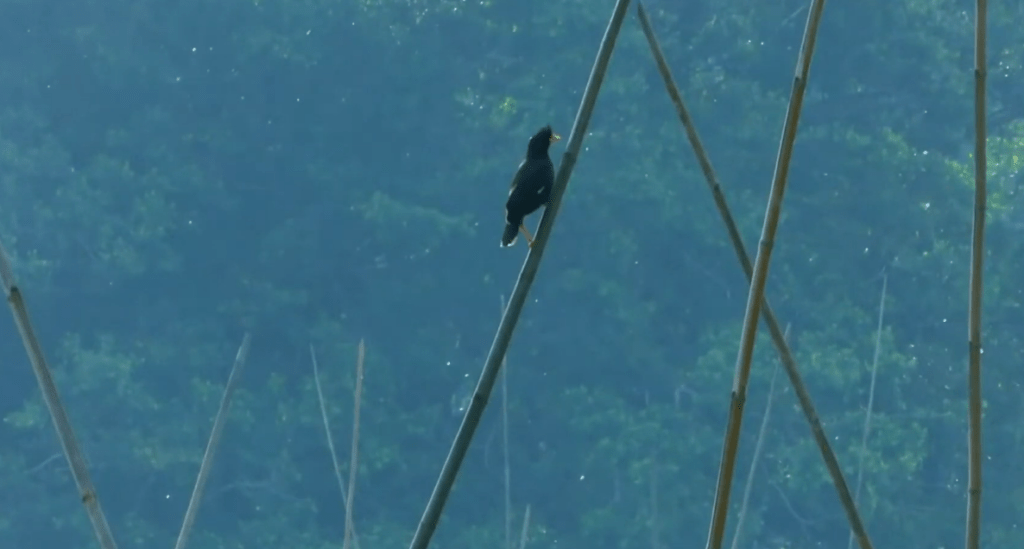
What really makes the crested myna’s story interesting is what happened after it left Asia. The species came to Vancouver around 1890, most likely through the pet trade. It moved in and became established. Eventually, it had tens of thousands of people living there, some going as far south as Oregon and Washington. For some reason that isn’t completely clear, it started going downhill around the middle of the 20th century and eventually stopped living in North America altogether. It’s one of the stranger times things went the other way in the history of introducing birds. Given how well it could adapt, a species that should have done well didn’t.
It has also become established in Portugal, where it has been breeding near Lisbon since at least 1997 and is now spreading along the Setúbal Peninsula and the estuary of the Tagus. It is now on the list of invasive alien species in the European Union. This means that it cannot be legally brought into, bred, or released in member states. That’s the complicated truth about a bird that can change quickly: what works well in one situation can become a problem in another.
The IUCN says that the crested myna is not in danger in its natural range, where there is a stable population spread out over more than 20,000 square kilometers. It’s not a typical conservation story—there’s no urgent rescue mission and no time running out. The bird has really figured out how to live with us, in all our mess and complexity, without needing much from us in return. It’s something quieter and maybe more interesting. It’s not as easy as it looks to do that.
