


A farming community experiences a specific type of tension when it perceives policy from above as a threat. It doesn’t always come with a lot of noise. Sometimes it can be seen in the deliberate phrasing a village leader uses when talking about the provincial governor, or in the way an elderly farmer pauses before responding to a question. Since Governor Matthew Marcos Manotoc started advocating for a more aggressive conservation agenda for the province’s wetland areas—one that includes wildlife monitoring, forest protection, and an ecotourism partnership framework modeled partially on Singapore’s renowned NParks system—tension in Ilocos Norte has been steadily increasing.
The governor’s plan has some merit. Manotoc has been open about his desire to establish Ilocos Norte as a sustainable development model for the Philippines. His discussions about ecotourism collaborations and biodiversity initiatives with Singapore’s National Parks Board indicate a sincere and perhaps admirable goal. The province has significant ecological resources that should be preserved, including wetlands that link to larger regional ecosystems, migratory shorebird corridors, marine turtle nesting grounds, and a Philippine Eagle nest in Adams. Wetlands are disappearing at a rate three times faster than that of forests worldwide. Nobody should feel at ease ignoring that statistic.
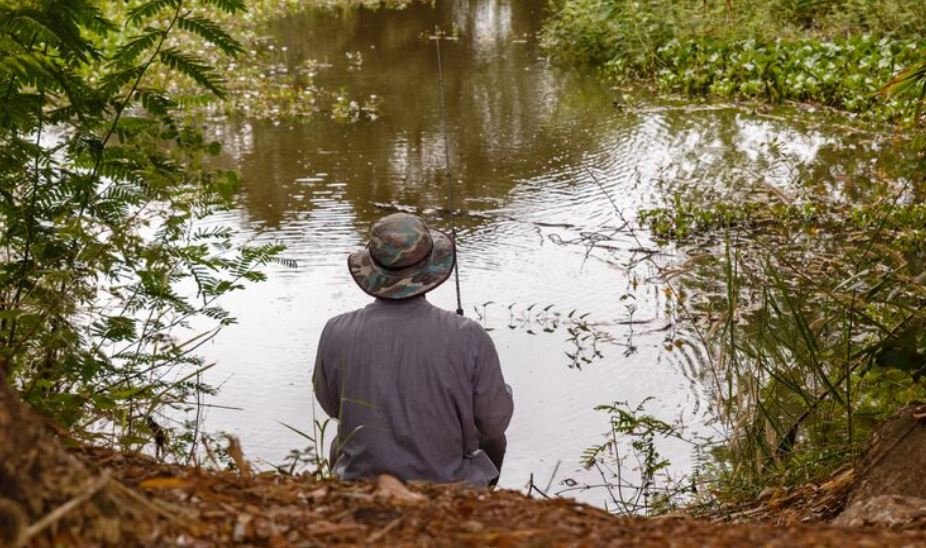
However, the farmers who cultivate the land next to these protected areas are not global environmentalists. Many of them are families who have farmed the same plots for many generations, and the new limitations, even in cases where they are still being defined, have caused genuine concern about what they can and cannot do on land that they claim as their own.
The pattern is recognizable and, to be honest, fairly predictable. Conflict arises when governments take action to preserve ecosystems without properly consulting the communities that rely on them. Many water-use disputes in farming regions can be traced back to a lack of inclusive planning from the beginning rather than malicious intent on either side, according to research from similar conflicts elsewhere.
The fact that both sides are partially correct is what makes the Ilocos Norte situation truly complex. Wetland protection has a compelling ecological case. In protected areas where buffer zones were not enforced, migratory bird populations have drastically decreased throughout the Philippines. At international conservation forums, wildlife experts have increasingly argued that maintaining the animal populations—fish, birds, and reptiles—that support these ecosystems is just as important to effective wetland management as protecting water and vegetation. Governor Manotoc’s initiative is consistent with that more comprehensive scientific knowledge.
However, it is difficult to ignore the annoyance of a farming household whose access to land or water is now contingent upon new circumstances that they had no control over. Some members of the impacted communities feel that the conservation agenda is being constructed more around the potential for ecotourism than around their means of subsistence. That impression might not be totally accurate. However, in local politics, perception has a tendency to become its own kind of reality.
Perhaps the more intriguing question is whether this conflict could have been prevented. The answer appears to be mostly yes, but only with early and sincere community engagement, given how similar tensions have manifested in other parts of Southeast Asia and beyond.
Effective wetland governance typically involves not only scientists and policy designers, but also the local farmers and residents. The administration of Manotoc has the institutional vigor and undoubtedly the global connections to create something significant. How much of that potential actually survives contact with the ground may depend on whether it can support local farmers rather than make them feel outclassed.
The province of Ilocos Norte has always taken pride in its identity, its scenery, and its cooperative relationship with the land. That narrative includes the wetlands. The rice paddies are, too. Whether this administration’s conservation efforts will be able to honor both remains to be seen.
