


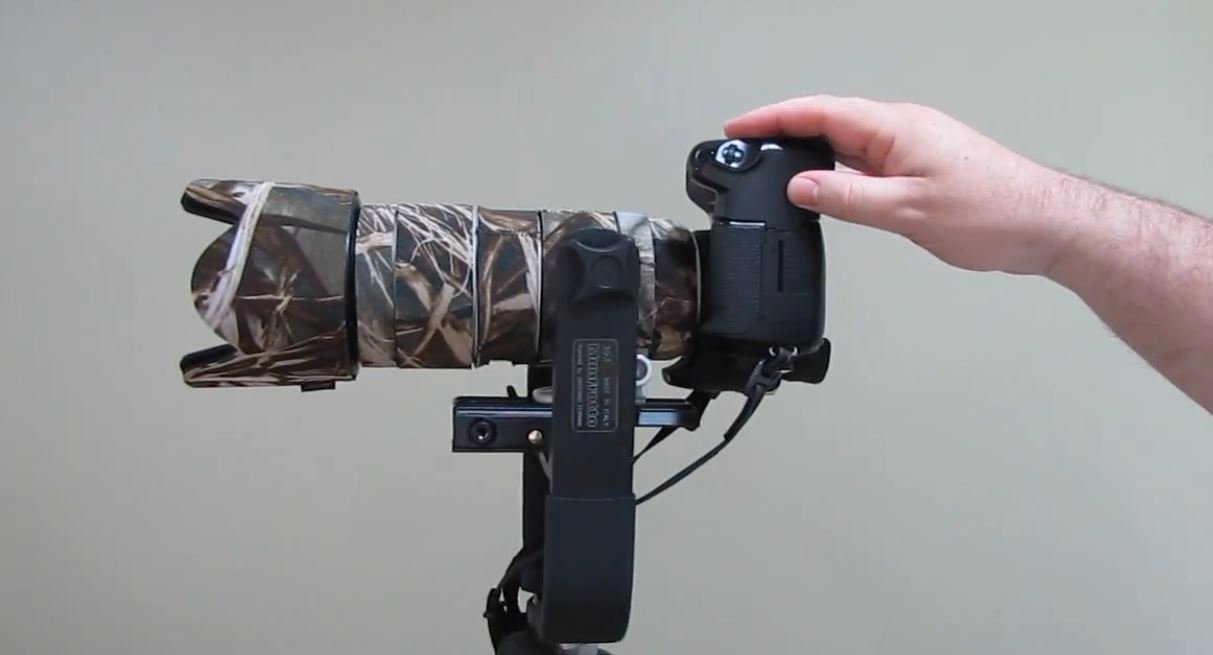
In online photography forums, there is a dialogue that occurs almost constantly. After realizing that their ball head is ineffective for tracking birds in flight, someone picks up a 500mm lens and begins inquiring about gimbal heads. First up is the Wimberley. Then the cost does. Then someone brings up the Benro GH2, and someone else subtly suggests the Manfrotto 393. Suddenly, there are fifteen opinions in the thread, and there is no obvious winner.
The argument is well-known. To be honest, there are valid points on both sides. In terms of engineering, the Manfrotto 393 is not a true gimbal. Unlike a “L”-style head, it does not balance the lens at its center of gravity. Instead, it uses friction, with two adjustable knobs on either side of the cradle that allow you to adjust the resistance just enough to prevent a heavy lens from flopping around while still enabling rapid, fluid movement. It sounds like a compromise, and in certain respects it is. However, that friction system performs better than it probably should in the field when a 150-500mm or even a 300-800mm is installed.
A suitable gimbal is the Benro GH2. It employs the “L”-shaped design that most serious bird photographers prefer; instead of requiring the lens to be lifted straight up and out, it slides sideways out of the quick release. It’s more important than it seems. The last thing you want is to have to wrestle a heavy lens vertically out of a “U”-shaped cradle when you’re in a hide at dawn, switching bodies or making quick adjustments. Additionally, the GH2 has more weight capacity, panoramic and vertical scales, and Arca-Swiss compatibility from the outset. These are genuine benefits.
What makes the 393 superior to the GH2, then? There are several reasons, and they are not insignificant.
The obvious one is price. The 393 is about one-third the price of more advanced gimbal heads, which is a big difference for a photographer who is just starting out with long-lens wildlife photography. The 393 is more significant.
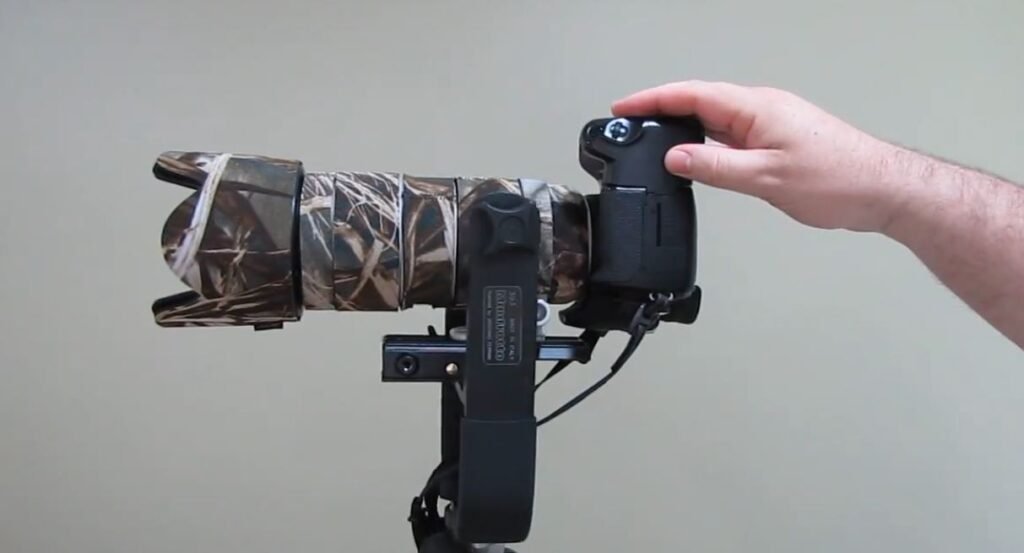
It allows you to pan and tilt smoothly enough to track moving subjects, handles monopod use elegantly, and supports lenses up to the 600mm prime range without any issues. Wildlife photographers who began using the 393 frequently talk about it with a sort of grudging affection; it’s not because it’s flawless, but rather because it allowed them to shoot when nothing else in their price range could.
Additionally, the build quality conveys a certain message. Unlike true “L”-type gimbals, which are cast, the 393 is primarily stamped metal in a “U”-within-“U” configuration. Because of its design, it can transmit more vibration than a heavier, better-damped head and doesn’t lock down with quite the same rigidity. One thing to be aware of up front is that photographers who have already invested in Arca-Swiss plates are frustrated by the proprietary mounting plate, but this is easily resolved with an adapter.
Nevertheless, there is no dedicated lock for the pan motion, which is a real annoyance when moving the setup between positions because the lens can swing freely unless the friction knobs are fully tightened. It can cost you a moment that you won’t get back if you change those settings just before a shot. That issue does not exist with the GH2.
The Manfrotto 393 is the head for a photographer who needs to start somewhere and can’t yet justify the step up. This is probably the most honest framing. For someone who has made the decision that long-lens wildlife work will be a significant part of their practice and wants a tool that won’t feel like a compromise after six months, the Benro GH2 is the best option. Depending on where you are in that journey, neither response is incorrect.
