


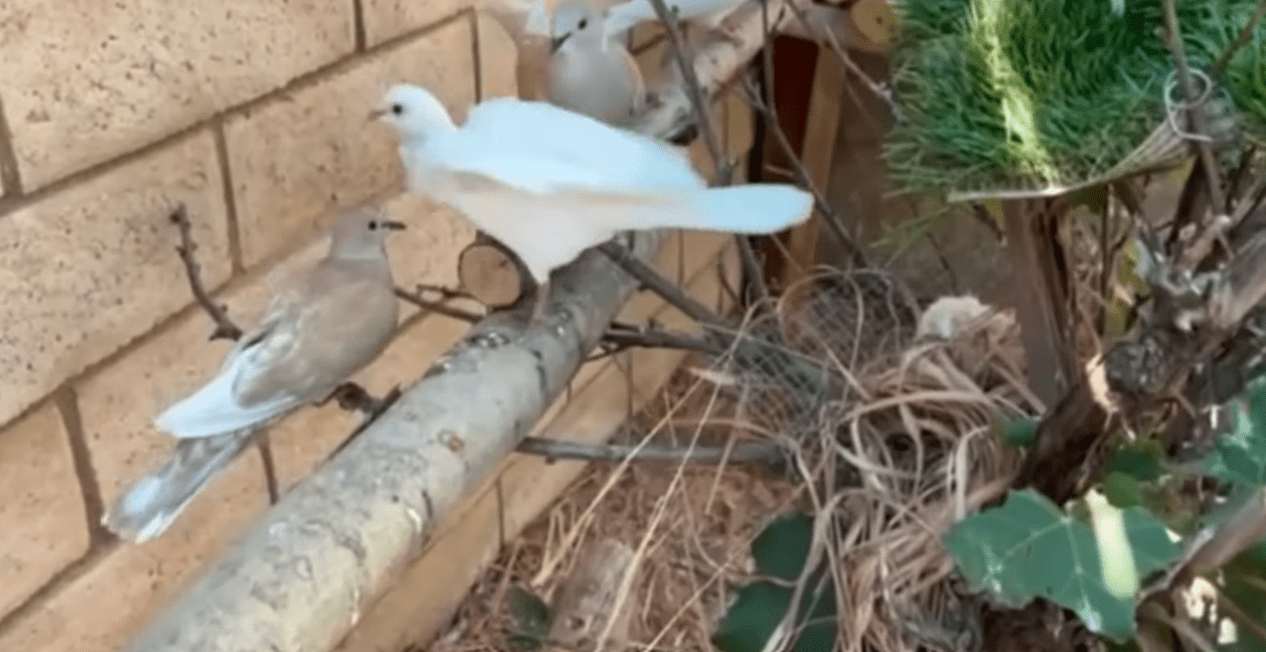
A small dove lives in Ilocos Norte, Pangasinan, and a lot of the Ilokandia region in the northern Philippines. Most people know what it is called before they know its scientific name. The Pagaw is what they call it. Along the edges of rice paddies and grassy lots, it moves in pairs or loose groups, bobbing its head with each step and picking at seeds with a slow focus. People who live there watch this kind of bird all the time without even realizing it.
The Pagaw is the Ilokano name for the Zebra Dove, which is scientifically called Geopelia striata. It is a small, grayish-brown bird with a long, barred tail, finely scaled black and white neck markings, and a bright blue patch of skin around each eye. When you get close enough to see it, that blue skin looks a little strange. The bird’s body is simple, quiet, and made to blend in. It looks like it was put together by nature, but those eyes make it clear that it wasn’t.
It makes a soft, rhythmic sound that sounds like a cooing and can be heard easily over open ground. When the morning is sticky, quiet, and right after sunrise, the sound of the Pagaw is almost calming. It doesn’t need your attention. It takes time to earn. People in Pangasinan and Tarlac grew up hearing it outside their windows, in their yards and fields, and near grain stores and garden walls. It became background noise that you only notice when it’s gone.
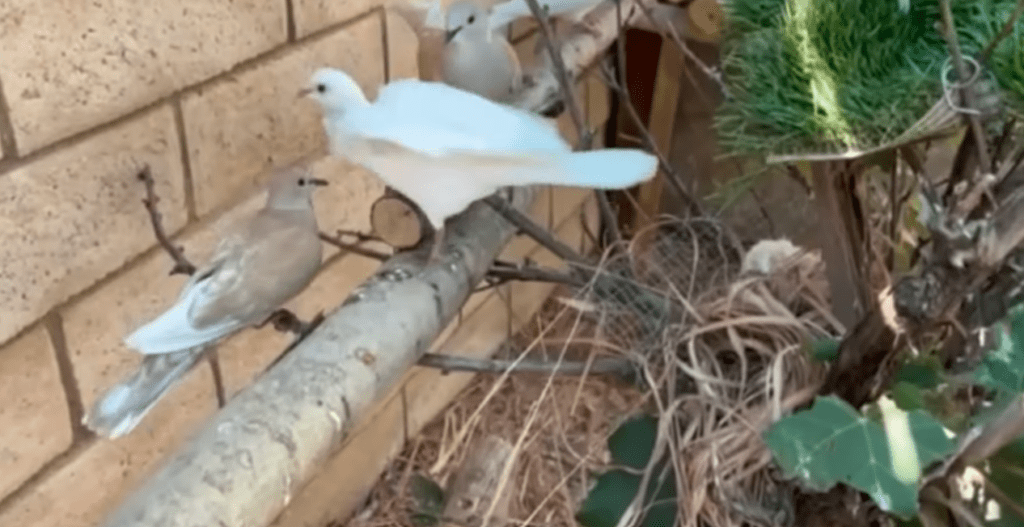
In some places, that absence is already starting to feel real. In general, the Pagaw is a calm animal. It doesn’t easily scare. It feeds out in the open, moves slowly, and stays still when people get close. This is a behavior that has become a weakness in a bird that has no reason to be afraid of people. People in the area have known for a long time that the Pagaw is one of the birds that local hunters target the most because it is so easy to get close to. When birds don’t run, they get caught.
It’s still not clear if population pressures are bad enough to make the Zebra Dove a formal conservation concern across its wider Southeast Asian range. The species lives all over the world. It is native to Myanmar, the Thai-Malay Peninsula, Sumatra, and Java, and it has been introduced to many other places. It’s not a bird in crisis around the world. But what the Filipinos went through with the Pagaw shows that local abundance and local protection are not the same thing, and the gap between them can close faster than anyone thinks.
In the Philippines, the Pagaw is mostly known by its common name, not its scientific name. This is an interesting fact that you should think about. This bird is a normal part of life in the country. It can be heard in the morning in Pangasinan and seen in the distance by someone working in a field. People often don’t notice the wildlife that lives so close they are. It doesn’t seem rare, so it’s not something that should be kept safe. That’s the kind of assumption that doesn’t hold up well over time.
People who are photographers and are part of Birdwatch Philippines feel like they need to defend the Pagaw. Birdwatching requires a lot of patience and close observation, which is what these pictures taken in Urdaneta City with telephoto lenses show. The feather patterns on this animal are very detailed, making it a real work of quiet beauty. It’s harder to say if that attention will lead to more people being aware of its situation.
There is no chance that the Pagaw will go away tomorrow. As long as enough of them are still in Philippine fields and gardens, though, that may be when the choice is still open. Before the situation gets worse, something could still be done. That window only stays open for a short time.
