


When you learn that something you’ve been doing with the best of intentions may actually be harmful, a certain kind of guilt sets in. When the RSPB released guidelines in April asking people to remove their seed and peanut feeders between May and October, millions of British households—an estimated 16 million people regularly put food out for garden birds—started to feel that way. The headlines changed quickly. The panic spread more quickly.
However, compared to the suggested coverage, the actual guidance is more cautious. The RSPB is not advocating for complete cessation of bird feeding. It was created in collaboration with researchers from the Institute of Zoology and the British Trust for Ornithology. Its message is to feed safely and seasonally. Peanuts and seeds are available from May to October. Suet, fat balls, and mealworms are still good all year round. One version of that story is frightening, while the other is subtly quite reasonable, so it’s important to distinguish between the two.
The disease known as trichomonosis, which is brought on by the parasite Trichomonas gallinae, is the cause of the change. Since its initial discovery in British finches in 2005, it has been destroying populations. Since the Big Garden Birdwatch started in 1979, the number of greenfinches has decreased by about 67%. They are currently listed as birds of conservation concern on the UK Red List. The disease is thot to have killed six million greenfinches and chaffinches in recent years. Birds are unable to swallow because the parasite attacks their throats. Summer is the danger window because it lives longer on surfaces in warm weather, such as feeder ports, seed trays, and the edges of bird tables.
The image of a bird at a feeder, surrounded by food and unable to eat, is almost unsettling. It’s one of those biological atrocities that goes unreported until a charity releases a press release, despite the fact that it has been happening in gardens around the nation for twenty years.
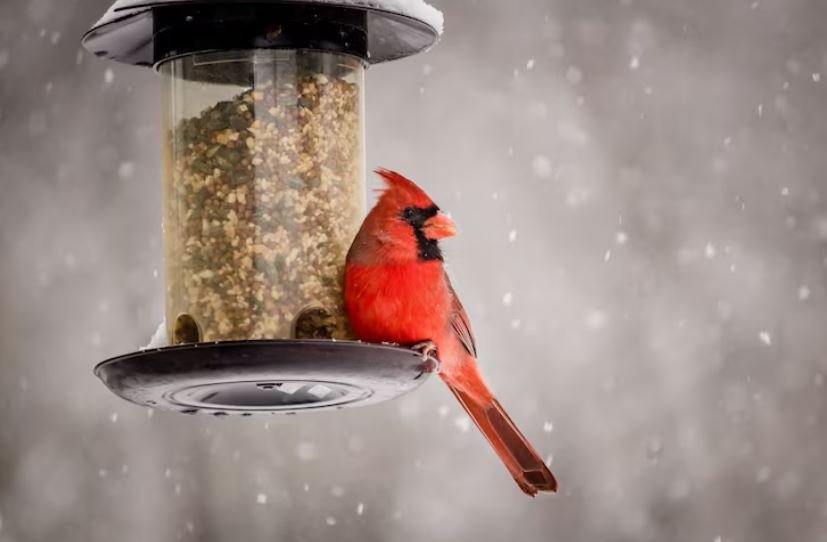
On one level, the guidance is simple, but as you zoom out, it becomes more intricate. The RSPB’s recommendations are predicated on birds being able to obtain sufficient natural food during the summer, such as insects, berries, and garden plant seeds.
This is more true in rural areas with wildflower meadows and hedgerows close by. The picture is less clear in crowded urban gardens. According to research from the University of Sheffield, supplemental feeding in cities can significantly increase the success of breeding for species like great tits, and urban environments support substantially fewer insects than more natural habitats. Therefore, the general advice might be more effective in some postcodes than others. This is not an excuse to disregard the advice, but it is an excuse to consider your own garden instead of enforcing a single rule everyplace.
Beccy Speight, the chief executive of the RSPB, stated clearly: “We’re not asking people to stop feeding, just to feed in a way that protects birds’ long-term health.” That framing is important. There is actual science behind how diseases spread. The decline in greenfinches is a significant statistic. However, the same studies that show how diseases spread also highlight hygiene as one of the most important factors: cleaning feeders once a week, moving them frequently, changing the water every day, and avoiding letting out-of-date food sit in warm weather. These adjustments can be made without completely removing feeders, and in some situations, they might be more beneficial than leaving an empty hook by the kitchen window.
It appears likely that both statements are true simultaneously: the illness is severe, and feeding habits are just as important as eating. In addition to offering natural food sources, planting sunflowers, teasels, and ivy supports the insect life that birds actually require to raise their young. More than most people realize, providing water that is changed every day and stored in a protected area is beneficial, particularly during dry spells. Additionally, if seeds are released again in November, they are carefully monitored and placed in a clean feeder in small amounts.
The RSPB’s recommendations might change behavior sufficiently to affect greenfinch populations in a quantifiable way. It’s also possible that the impact is less than anticipated, birds congregate at the remaining feeders, and only a small percentage of households follow it. As of yet, no one knows. It’s obvious that those who are concerned enough about birds to feed them are the ones who ought to hear the whole story, not just the headline.
