


Early in the morning, a researcher places a mist net between two trees and waits somewhere deep enough in the Brazilian Amazon that the closest road is hours away. The vibrant, eye-catching species that show up in wildlife documentaries are not the birds that fly into it. Antbirds, woodcreepers, and tiny flycatchers are examples of small, brown, understory birds that live their whole lives within a few hundred meters of their hatching site. They are not interested in migrating. This area of forest is familiar to them. And a Louisiana State University crew has been catching them, weighing them, measuring their wings, and releasing them for forty years.
Over 15,000 individual birds from 77 non-migratory species made up the data gathered from that process over four decades, which served as the basis for a study headed by Dr. Philip Stouffer that generated results that were uncomfortable enough to deal with for a little while. The birds are becoming smaller. Since 1980, the majority of the study’s species have lost over 2% of their body mass per ten years. In contrast, their wings have become longer in relation to their bodies. Year after year, species after species, both shifts are continuously occurring in the same direction. The most alarming aspect is that this is taking place in an untouched, pristine rainforest, far from the soy plantation or the chainsaw clearance.
Thermal is the most likely answer. Longer wings aid in airflow and heat dissipation during flight, and smaller bodies dissipate heat more effectively. These adaptations are helpful when the outside temperature rises. Over the course of the study, the Amazon’s interior has become noticeably hotter and drier due to both global climate change and the impact of extensive deforestation at the forest’s periphery on moisture recycling deep within the forest. From the outside, the woodland appears to be in good condition. There are still trees. There is no damage to the canopy. However, the bodies of animals that have lived there for millions of years are showing signs of a change in the environment within.
This discovery seems to fit into a certain category: proof that the effects of our actions elsewhere are being felt even in areas of the world that we haven’t directly altered. It makes sense that conservation biology has spent decades concentrating on habitat loss, or the direct devastation of grasslands, wetlands, and forests. Although it adds a dimension to that priority, the Stouffer study does not conflict with it. Even when a habitat is physically intact, it can change in ways that require the animals that live there to adapt, generation by generation and decade by decade. No one can yet confidently respond to the question of whether that adaptability can keep up with the rate of change.
Similar trends have been observed in migratory birds in North America, with various long-term datasets demonstrating a decline in body size over the previous several decades and an increase in wing length in the opposite direction. The pattern is more difficult to write off as regional noise due to the convergence of these findings across wildly disparate bird populations and geographical locations. It implies that a variety of bird species are responding to warming in a systematic way, a biological reaction that is quantifiable but not immediately apparent to those who do not spend years capturing and weighing birds in the same area.
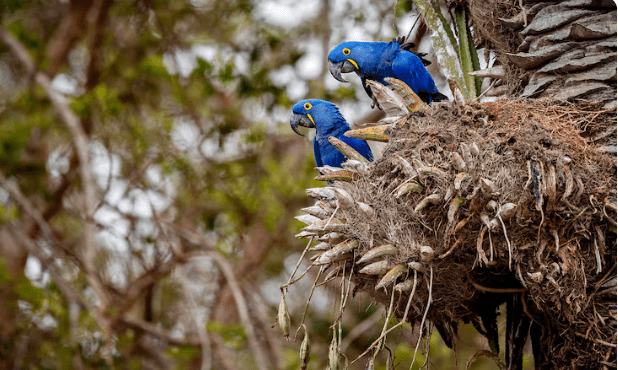
The level of scientific patience needed for Dr. Stouffer’s research is very uncommon. A trend line that is long enough to be persuasive is produced by forty years of data from a single site, collected using the same techniques, in a way that short-term study cannot. Only the following few decades of observation will provide an answer to the question it raises: how far these changes can go before they begin to impact population viability, breeding success, and the ecological interactions that depend on these birds. In that area of Amazon forest, the nets are still being raised before daybreak. The birds continue to fly into them. The measurements go on.
