


At first glance, the Mekong Delta seems almost misleading. The water flows slowly. In the shallows, egrets remain still. Pale green rows of rice paddies stretch to the horizon. In some ways, what scientists have been discovering here is all the more unsettling because it seems like one of those places that the modern world has not yet fully reached.
The Mekong Delta is more than just a geographical area. Approximately four million hectares of floodplains, wetlands, mangrove forests, mudflats, and peatlands support over 450 fish species and an estimated 18 million people, making it a living system. Up to 80% of the animal protein consumed by communities throughout the larger region comes from the fisheries in this delta. That is a substantial amount. Tens of millions of people’s access to food depends on how one river interacts with its surroundings.
Additionally, researchers studying animal health are increasingly keeping a close eye on it. Wild aquatic birds serve as natural reservoirs for low pathogenicity avian influenza viruses, according to the World Organization for Animal Health (WOAH). Along their migratory paths, these birds spread the viruses over great distances. They frequently exhibit no symptoms while releasing viral particles into the surrounding water, soil, and feed sources thru their feces and respiratory secretions. The Mekong Delta’s dense, biodiverse wetland habitats provide the ideal conditions for those viruses to spread, adapt, and occasionally change into more dangerous forms.
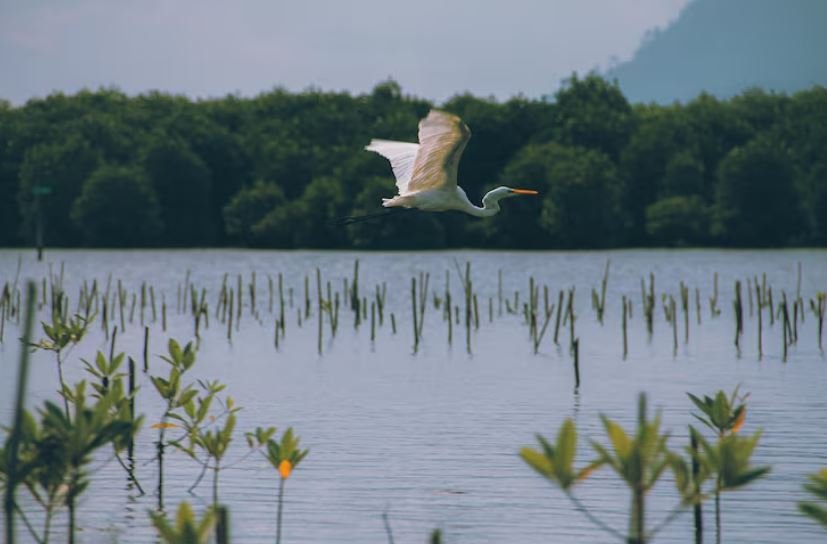
The sheer volume of interaction taking place in the delta is what makes it so important from a surveillance perspective. Domestic poultry and migratory waterfowl mix. There are live bird markets in the area. Farming communities depend on nearby managed aquaculture as well as wild fisheries. In a way, the virus has every chance it requires.
Public health coverage has a propensity to treat avian influenza as a poultry industry issue, involving trade routes being closed, flocks being culled, and economic disruption. That framing misses something, but it’s not entirely incorrect. The mutations that happen subtly in wild bird populations before anyone knows to look are the ones that most worry scientists. A new strain frequently travels hundreds of kilometers and passes thru dozens of hosts by the time it arrives at a commercial farm.
In this regard, wetlands in the Mekong Delta are more than just an ecological issue. They are epidemiological in nature. When WOAH links a novel genetic variation to a reservoir population in Asian wetlands, it describes the beginning of a chain that may, in the wrong circumstances, spread far beyond the waterways of the delta.
Sitting with the irony here is worthwhile. The environments where avian influenza viruses find their most stable long-term homes are the same wetland ecosystems that environmental organizations like IUCN and WWF are desperately trying to restore and protect because of how much human life depends on them. Wetlands filter water, protect fisheries, buffer floods, and store carbon. By their very nature, they serve as gathering places for the wild birds that spread these viruses. While keeping an eye on them and protecting them are not mutually exclusive objectives, they do necessitate juggling two realities at once.
Events that take place in the Mekong Delta do not remain there. National borders and biosecurity regulations are not observed by migratory birds. In a single season, poultry populations in East Asia, Central Asia, or Europe may exhibit a mutation linked to Asian wetlands. The flyways these birds travel are old, dependable, and totally unaffected by human planning.
Surveillance is still the most effective tool available right now. The clearest early warning is provided by WOAH’s monitoring networks in conjunction with regional cooperation frameworks. However, observing a slow-moving river and understanding what lies beneath its surface calls for constant focus rather than sporadic alarm.
