


A bird and a commercial aircraft occupy the same area of the sky for a brief moment. The majority of passengers are unaware that it occurred. Somewhere along the fuselage, the pilots may hear a dull thump or feel a slight shudder. However, the result could be disastrous if that collision involves a jet engine during takeoff. That moment has already occurred 51 times at Ninoy Aquino International Airport in just the first half of 2026.
In 2025, 953 bird strike incidents were reported in the Philippines. Just the first half of 2026 saw an additional 250. During a Senate committee hearing in early July, Senator Raffy Tulfo was persuaded by those figures to demand immediate policy reform. He presented the problem as a pattern that required an actual response rather than as a hypothetical risk. “This is not about expecting the worst,” he said. “It’s about preparing for what we already know is possible.”
Geographical factors contribute to NAIA’s uncomfortable situation. The wetland park near the airport is a bird sanctuary that can accommodate thousands of migratory birds on any given day. Anyone who has been following this issue for more than a few years is aware of the irony. The same issue was brought up by PAL’s president back in 2012, who noted that having a sanctuary of that size so close to the busiest international terminal in the nation was, to put it mildly, an unusual decision. It’s still not entirely resolved.
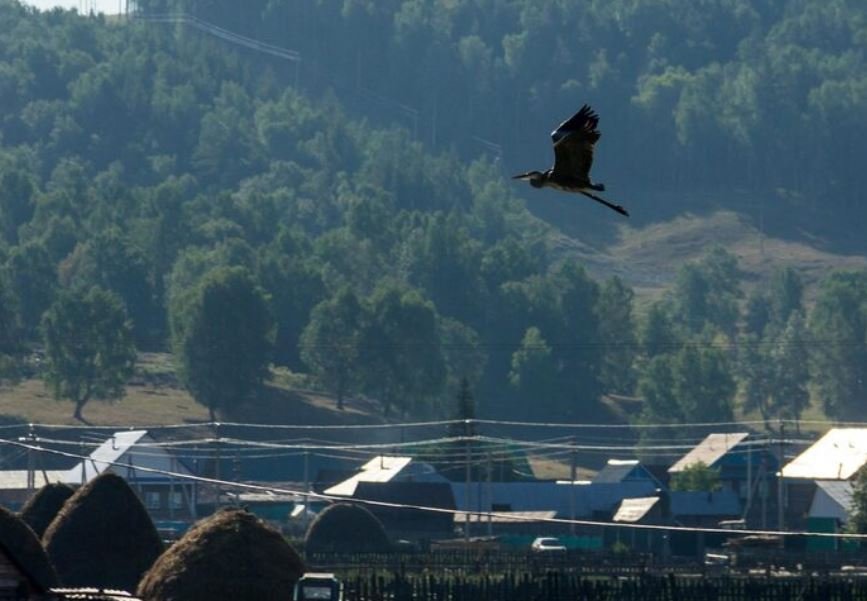
The instruments currently in use at Philippine airports provide a fairly accurate picture of the state of the nation. CAAP uses manual dispersal techniques, such as laser beams, flags, gas cannons, and firecrackers, according to aviation officials.
They’re not exactly ineffective. They have the ability to startle birds, interfere with flocking patterns, and temporarily divert movement away from runways. However, they cover a small area, are reactive, and must be manually operated. In a matter of minutes, a flock can regroup and come back.
Previous plans suggested something more ambitious. In 2011, the Manila International Airport Authority announced plans to purchase Long Range Acoustic Devices, which are the same technology used aboard vessels navigating pirate-heavy waters in the Gulf of Aden. Each unit would cost approximately seven million pesos. The concept was appealing: a high-intensity, directed sound that could drive birds away over a much larger area than traditional deterrents. It’s still unclear if those systems were ever fully implemented and maintained at the scale initially intended.
In recent times, the Philippine Civil Aviation Authority has been examining trained birds from an alternative perspective. Raptors have been used by nations like France, Ireland, and the Netherlands to neutralize unapproved drones and divert other bird species from flight paths. It’s an approach that recognizes a crucial fact: nature reacts to itself. More quickly than any gas cannon, a hawk in the air alters the behavior of every smaller bird within sight. Although CAAP’s investigation of this option is still in its early stages and officials have taken care not to overpromote it, it represents a change in perspective.
As a member of the Committee on Finance, Senator JV Ejercito has pledged to advocate for funding for contemporary acoustic or sonic deterrent systems prior to the 2027 fiscal year. The topic of pigeon racing near airport runways, which is presently unregulated and does not require organizers to work with aviation authorities, has also come up as a particular gap that needs to be filled.
Observing all of this gives the impression that the Philippines is actually facing an issue for which there is no simple technological solution. First were birds. That is exactly what PAL Capt. Enrique Clemente stated over ten years ago, and it is still true today. There is no system that completely removes the risk. The speed at which you can identify, discourage, and react—as well as the number of protective layers separating an aircraft ascending over Manila Bay from a flock of migratory birds—are what change. Those layers are currently thinner than they most likely ought to be. Before the year’s count rises, the question is whether the urgency in the Senate chamber translates into something on the tarmac.
