


Peregrine falcons have been building nests at a quarry in south Staffordshire for many years. There are sheer cliffs. The location is far away. Almost on time, the birds return each spring to lay their eggs and raise their young. The fact that someone is typically observing is something that those falcons are unable to know and that conservationists took too long to fully acknowledge.
Although the theft of peregrine falcon eggs and chicks from British nesting sites has been going on for decades, during the last ten years it has become more covert and systematic. At least 126 British peregrine nests were raided between 2014 and 2023, according to a joint investigation by The Guardian and Arab Reporters for Investigative Journalism that was released earlier this year. Twenty-one of those raids were verified by eyewitness accounts, DNA testing, or camera footage. The near-certainty that many more were never found at all exacerbates the numbers.
Demand in the Gulf states, especially the United Arab Emirates, where falconry is more of a cultural institution than a pastime, is what propels the trade. The birds fetch huge prices. Adult peregrines in good health can sell for tens of thousands of dollars.
British wild-caught birds are particularly sought after because of their racing heritage and what buyers describe as an exceptionally pure bloodline. An undercover journalist was informed by an employee of a well-known falconry organization in the United Arab Emirates that British birds were particularly sought after due to their speed and competitive record. The same thing was said by four other traders.
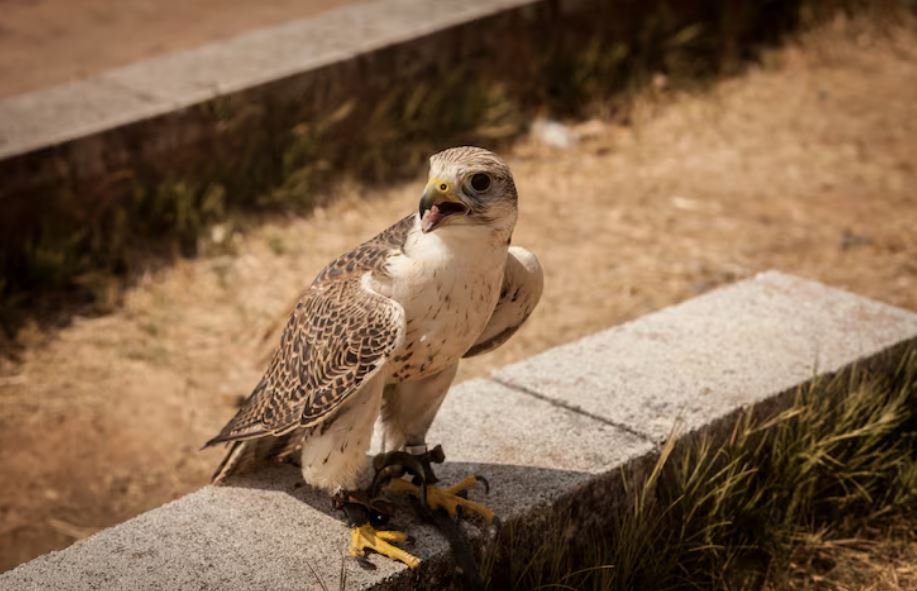
All of this is remarkable because of how well-organized the operation has become. Poaching in the romantic, lone-wolf sense is not what this is. Following reports of a man publicly boasting about his earnings from removing chicks from wild nests, Police Scotland started looking into the network in 2021. In just 27 physical inspections of captive breeding facilities in 2023 and 2024, the National Wildlife Crime Unit discovered 15 wild birds. One NWCU officer stated, “Most often when we’re throwing stones, we’re hitting something.” That is a telling statement. It implies a system with some depth rather than isolated incidents.
The intricacy of the legal framework surrounding falcon trading may make enforcement more difficult. Britain exports more live raptors than any other nation, and trading captive-bred falcons is completely legal. The biggest importer is the United Arab Emirates. Thus, the pipeline is already in place and is authorized, controlled, and documented.
How many wild birds are being laundered into that pipeline through false parentage claims and non-registration is what law enforcement and conservationists are attempting to determine. It is difficult to demonstrate, and the industry has resisted. The finding of wild birds in breeding facilities, according to the CEO of the International Association for Falconry, “should not be interpreted as evidence of widespread criminality.” Maybe that’s a sensible precaution. However, it is challenging to fully account for the fifteen wild birds discovered in twenty-seven inspections.
There is now a gap between the criminal and legal trades. And into that void have emerged individuals prepared to use abseiling gear to climb isolated cliffs in order to steal chicks from nests, as Jeffrey Lendrum, one of the most infamous falcon smugglers in the world, was repeatedly caught doing for more than 40 years prior to his conviction. Joshua Hammer’s book The Falcon Thief tells the tale of Lendrum, a man whose entire career revolved around stealing rare raptor eggs and selling them to private collectors, sometimes for six-figure sums. He frequently hunted in Britain. He wasn’t the final one.
When prosecutions are successful, the monetary fines imposed seldom seem commensurate with the extent of the theft. Although it made headlines in 2024 when a nest raider was ordered to pay £27,000, the market value of the birds being taken is many times higher, so it’s difficult to see that as a significant deterrent. The math eventually begins to work against conservation.
After the trafficking of weapons, drugs, and people, wildlife trafficking is the fourth largest illicit trade in the world. More than 4,000 species are being targeted worldwide, in more than 80% of countries, according to a 2024 UN report. This often seems like a far-off issue to British readers, like something occurring on the savanna or in the rainforest. However, the raided nest sites are located in Scotland’s Staffordshire and Yorkshire. The cliffs are British cliffs. For years, the locals who live close to those quarries have watched these birds fly overhead. That ought to be something to be upset about.
