


A photograph stops people cold every October inside the Natural History Museum in London. A brown hyena, an animal that hardly anyone ever sees, stood in the dusty light and crumbling walls of a Namibian diamond mining ghost town last year. Wim van den Heever, a photographer from South Africa, had spent ten years looking through that abandoned settlement. After ten years of tracking and scraping evidence, the animal itself was never found. The whole obsession suddenly made sense when the camera trap caught it one evening.
This world is like that. It runs on a schedule that most people would find intolerable.
The closest thing this industry has to a grand stage is international nature photography competitions, such as Wildlife Photographer of the Year, the BigPicture Natural World Photography Competition, and the World Nature Photography Awards, which are currently in their seventh year. The recognition is important, the prizes are genuine, and a win can completely change a working photographer’s career. However, when viewers stand in front of those winning photos in a museum gallery, they seldom know what goes into them.
Last year’s BigPicture Aquatic Life winner, Shane Gross, spent a summer morning on Vancouver Island looking for western toad tadpoles, which he had only heard about indirectly. He was informed by a local that they relocated in large numbers in the late afternoon. So he returned. In the water, waiting, camera in hand. He obtained an almost surreal image of hundreds of tadpoles suspended in filtered light above lily pads. It doesn’t appear to be patience. It doesn’t resemble the previous hours.
Every serious competition winner has one thing in common: they are all eager to come back. Before he received the desired portrait, Philipp Egger spent more than four years observing an eagle owl nest from a distance. After four years of non-pressing observation, the animal’s rhythm was sufficiently understood to forecast a single ephemeral moment. It takes about a split second to take the picture. It is nearly impossible to understand in any other professional setting.
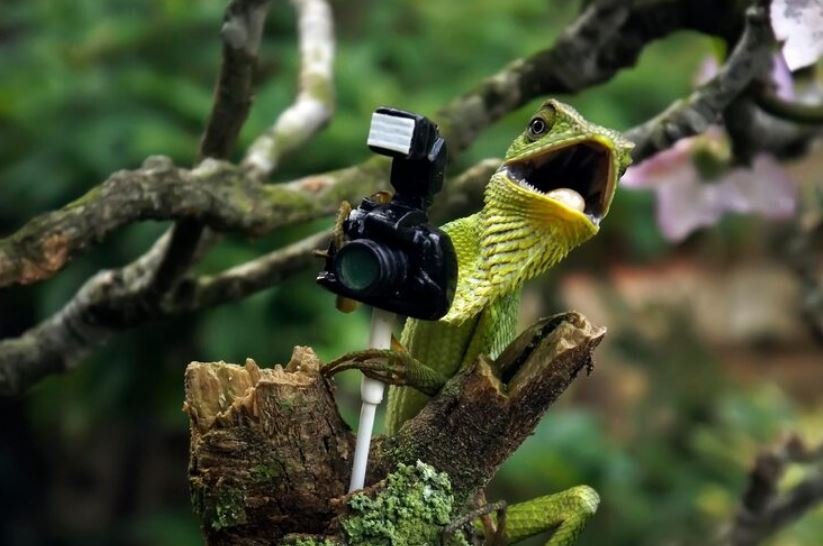
It’s important to note that in recent years, these competitions have grown significantly. The younger categories have produced truly striking work. For example, at the age of ten or younger, Jamie Smart captured an orb-weaver spider in mid-Wales on a chilly September morning, framing something that most adults wouldn’t even consider. With an image of a golden puffin that outperformed submissions from photographers twice her age, a sixteen-year-old recently won a junior competition in the UK. The competitions appear to be discovering that formal training is only a small portion of what generates this work, and that the instinct for it arrives early.
It is difficult to overlook the conservation theme that permeates these contests, and it doesn’t feel as performative as it occasionally does in other sectors. Ralph Pace photographed a swell shark egg case glowing against kelp in Monterey Bay by diving through strong currents. Researchers estimate that the kelp forest has decreased by more than 95% over the past 34 years. Sebastian Frölich visited moorlands in Austria to record an ecosystem that was disappearing.
Alvaro Herrero did not try to soften the photograph of a humpback whale that was fatally entangled in fishing gear. These images are not ornamental. They have a particular point of view about what is being lost, and the competitions are now one of the best ways to make that point known to a wider audience.
It’s hard to romanticize what the circuit demands of its participants. Nothing is guaranteed by the waiting, the unsuccessful trips, the weather, animal behavior, or light. At first glance, Jaime Rojo’s grand prize photograph of millions of monarch butterflies in Mexico appears to be a sunlit forest. Finding the story within required years of ecological knowledge, timing, and access. Off the Shetland Islands in Scotland, Franco Banfi tracked northern gannets and dove into the water to catch them. In order to pinpoint the precise location of the light, Kazuaki Koseki has spent seven years taking pictures of fireflies in a single forest in Yamagata Prefecture, returning season after season.
It’s possible that these contests don’t actually measure photography in the technical sense. They gauge a sort of dedication to observing things that most people pass by without pausing over time. Almost incidental to that is the camera.
