


At one point, Dr. Gretchen Daily is running through the undergrowth with a butterfly net somewhere deep within a Costa Rican coffee plantation. No cell phone service. No gatherings. Just insects, data, and the kind of fieldwork that would change the way governments from Beijing to Nassau make decisions about forests, water, and land years later. Although it’s a small picture, it conveys a significant message about this scientist’s work: she is grounded in reality, even though her ideas are now being discussed in development banks and boardrooms.
Daily is a co-founder of the Natural Capital Project, or NatCap, and a biology professor at Stanford University. She has spent a significant portion of her career addressing an issue that most ecologists and economists once dismissed as either morally repugnant or unsolvable: what is the true value of nature in monetary terms?
Applying this question to a mountain watershed or a mangrove swamp seems odd. However, Daily makes the patient, data-driven, and increasingly compelling case that nature already serves as an economic engine. It simply isn’t being tallied. Water that cities would otherwise have to spend billions of dollars treating is filtered by forests.
Floods that would otherwise destroy homes and crops are absorbed by wetlands. Storm surges are blunted by coral reefs. Trillions of crops are pollinated by bees. These are not gifts that are abstract. They are quantifiable services that operate continuously, are offered at no cost, and vanish silently without ever appearing in a budget line.
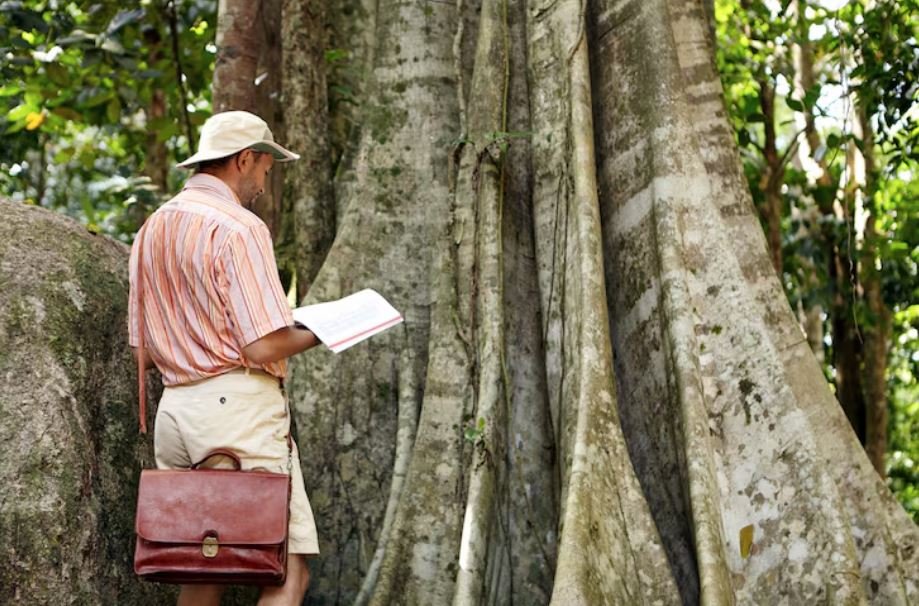
Daily’s initial research in Costa Rica, where she arrived as a PhD candidate in the early 1990s and discovered one of the highest rates of deforestation in the world, gave rise to the Natural Capital Project. She met with the environment minister and president of the nation. Something changed. She started considering how to make the economic case for preserving forests rather than just recording what was disappearing. Eventually, Costa Rica established the first national payment system to encourage landowners to protect trees. Since then, that model has been imitated all over the world.
In more than 80 countries, NatCap currently collaborates with international banks, governments, and non-governmental organizations. More than 185 countries have used its open-source software, InVEST, to map and measure ecosystem services, such as which watersheds provide clean water, which areas protect against flooding, and how much it would actually cost to replace them if they disappeared.
The math can be shocking at times. By choosing to preserve the Catskills watershed instead of constructing a water treatment facility, New York City was able to save about $3 billion. The work was already being done by the forest. No one had simply jotted it down.
There are critics, and it’s not totally incorrect for them to object. A forest shouldn’t have to demonstrate its financial value in order to be protected, according to some environmentalists, who contend that giving nature a monetary value inevitably subjugates it to market logic. Daily has heard this numerous times. Rather than being dismissive, her response is cautious.
She claims that appreciating nature is not the same as making it a commodity. Selling ecosystems is not the aim. The goal is to highlight their contributions in the systems that actually make decisions about them, such as development, finance, and policy. According to Anne Guerry, lead scientist at NatCap, “we use capitalism’s own terms to help people who may not value nature a priori to see how important it really is.”
That position is both genuinely pragmatic and somewhat uncomfortable. It gives in to a framework that is deemed insufficient by many conservationists. However, Daily appears to have come to the conclusion that nobody can afford to wait for the world to cultivate a more pure relationship with nature. While philosophers argue, ecosystems continue to function.
Her longtime mentor at Stanford, Paul Ehrlich, describes her as the world’s best environmental scientist under 60. Her pupils want their names to be on chickens. She wears Dansko clogs while riding a mountain bike across campus. All of this is not coincidental; rather, it indicates a scientist who has been able to operate at the level of heads of state and international finance while maintaining a genuine curiosity and connection to the fieldwork. Contrary to popular belief, that combination is uncommon.
The InVEST software used in ministries from Nairobi to Beijing, the canopy studies, and the butterfly counts all point to the same fundamental belief. For a very long time, human civilization has been supported by the natural world. Someone needs to start maintaining the books.
