


The situation is almost ridiculous. Even after two nations lost over two million people to the same virus, which spread precisely as a result of a communication breakdown, they are still unable to agree to exchange disease surveillance data. Both China and the United States came out of COVID-19 damaged politically, economically, and emotionally. However, it appears that the most important lessons have not been learned.
There was a brief, sincere period of cooperation following SARS in 2003. In order to develop shared disease response infrastructure, the U.S. and China’s Ministry of Health entered into a multi-year partnership. More or less, it worked. Then, in 2018, China decided to deny American researchers access to H7N9 avian flu samples. The unraveling started at that point. The information-sharing channels that could have had an early impact were already deteriorating by the time COVID-19 arrived.
The events that followed are now part of history: by the end of 2023, COVID-19 had killed at least 1.4 million people in China and 1.1 million in the US, with total economic costs in the US alone approaching $14 trillion. These figures are nearly unbearably high. However, pandemic cooperation did not even make the list of ten working-group areas at the Biden-Xi summit in San Francisco in November 2023, which both sides described with hardly restrained self-congratulation. That is a form of deliberate blindness.
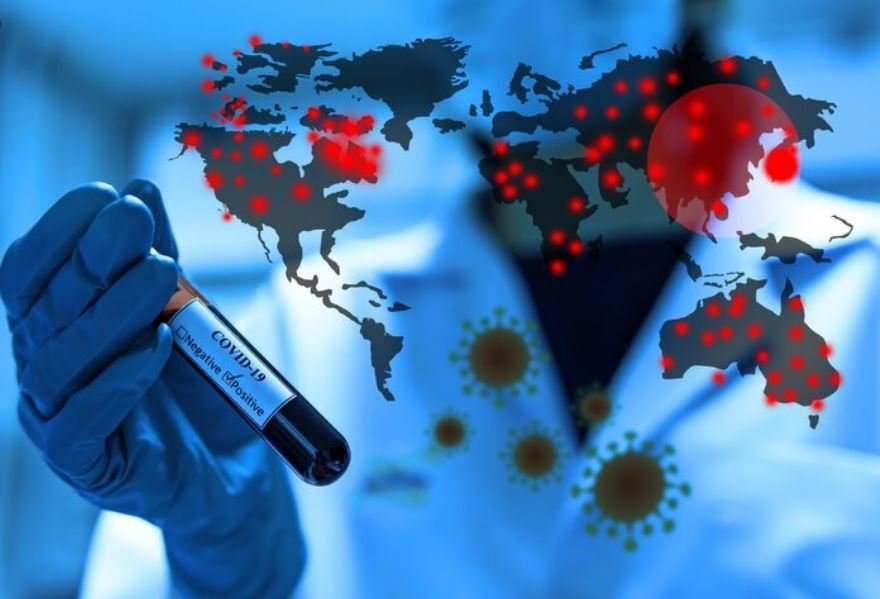
Even though it’s difficult to defend, it’s possible to understand how it happened. Any bilateral health agreement in the US ran the risk of becoming a liability rather than a victory because COVID-19 became so politically entangled with concerns about China’s responsibility. The domestic calculus was different but just as restrictive for President Xi.
Beijing has little desire to formally revisit the issue with Washington after placing a great deal of political credibility on China’s pandemic response, which history has not been kind to. A certain level of institutional comfort with making mistakes is necessary for transparency, and in an increasingly centralized system, that comfort isn’t exactly plentiful.
However, because the politics are inconvenient, the geopolitical math remains largely unchanged. Disease doesn’t care which lab discovered the variant or whose genome sequencer generated the data. The next major outbreak is not hypothetical, as epidemiologists and health security researchers frequently note, sometimes with barely disguised frustration. Shortly after the summit, the World Health Organization expressed concern over an increase in respiratory illnesses among children in northern China. Another significant coronavirus outbreak is very likely, according to experts. Once a pathogen is in motion, the window for proactive cooperation usually closes quickly.
Observing this unfold over the past few years, it appears that both governments are politically resistant but intellectually aware of the stakes. At one point, the U.S. Secretary of State stated unequivocally that working together is the only way to improve global health security. That is difficult to dispute. Additionally, it’s challenging to reconcile it with the real actions of the relevant institutions.
The International Science Council has identified a more general issue here: governments are passing laws prohibiting collaboration with scientists from competing countries, data sharing is slowing down, and research collaborations are breaking up as a result of geopolitical rivalry. The SIRA Act is a proposed law in the United States that would prohibit American scientists from utilizing specific foreign research platforms. It makes sense from an instinctive standpoint. In a world where the next pandemic may already be spreading in an underserved area, the ramifications are something to carefully consider.
A sort of forced humility has always been necessary for disease control, which is why it is so uncomfortable politically. The indifference of pathogens is democratic. It is not idealistic for rivals to share science. Only epidemiology is involved.
