


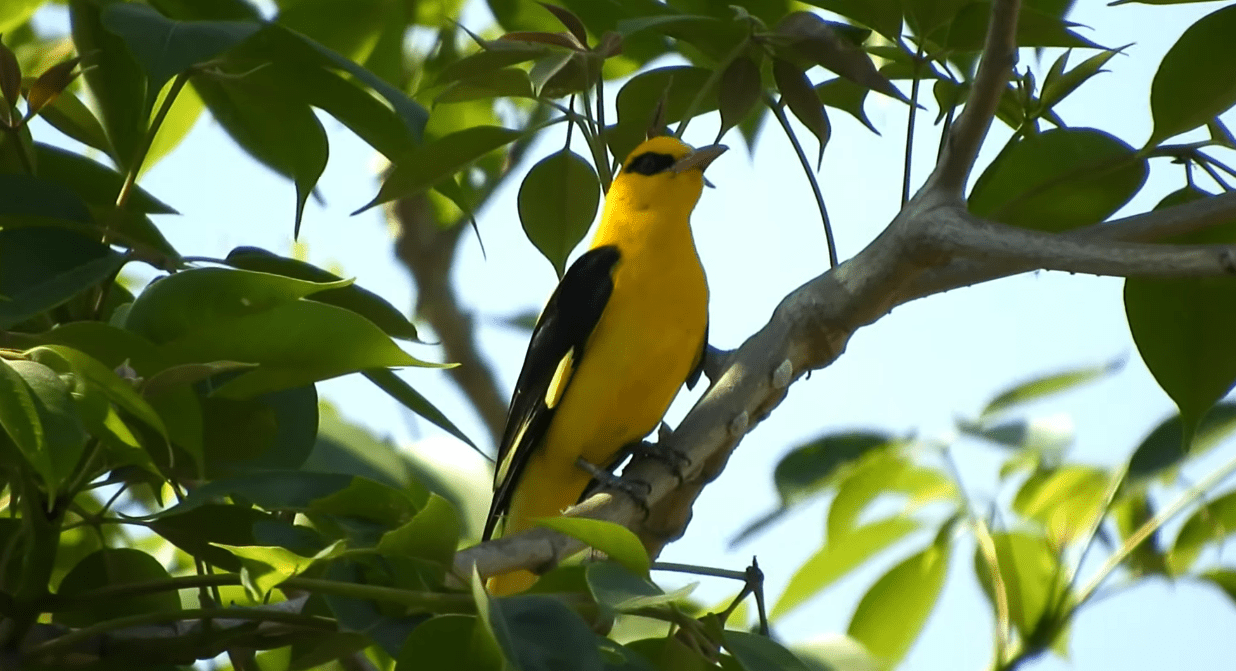
There’s a good chance that something yellow will catch your eye first in almost any garden in Metro Manila on a clear morning. The bird could be sitting in a mango tree, hovering near a flowering bush, or quickly moving from one branch to the other. Little, bright, and moving with an air of carelessness. People don’t always notice how many colorful little birds live in the Philippines, even though the country has a lot of different kinds of plants and animals.
The Black-naped Oriole, which is called the Kilyawan in the Philippines, is likely the most well-known yellow bird in the country. The bird is about the size of a housefly and is golden all over. Its mask and nape are bright black, and its bill is thick and pink. It looks very dramatic against a green canopy. Its song is smooth and sure of itself; it’s made up of rich whistled notes that can be heard clearly even in noisy cities. Because it lives in the upper canopy and eats berries and bugs, it usually makes noise from above. It lives on Luzon, Mindoro, Palawan, the Visayas, and Mindanao in the Philippines, but in slightly different subspecies forms. It’s part of a large Asian species whose type location was officially changed to Manila. That detail seems to fit in some way.
The oriole is just the most obvious way in, though. In the archipelago, the Yellow-vented Bulbul can be found in almost every city and suburban garden. Its head is shiny black and its body is pale, with a small but noticeable yellow spot near its tail. It happens so often that people stop noticing it, which is likely the best compliment nature can give to a species that has adapted to living near people. It builds its nest close to homes, eats ornamental plants, and stays in places where almost all other wild birds have quietly disappeared.
The Olive-backed Sunbird is another bird that looks best when you look more slowly. The male has a throat that glows blue or purple depending on how the light hits it. Its belly is yellow, which makes it easy to see when it flies over flowers. Sunbirds and hummingbirds are both nectarivores, which means they were designed to eat nectar from flowers. However, the two groups developed their hovering habits in very different ways. It’s hard not to feel like you’ve found something that shouldn’t be so easy to find when you see a sunbird working on a flowering vine in someone’s backyard.
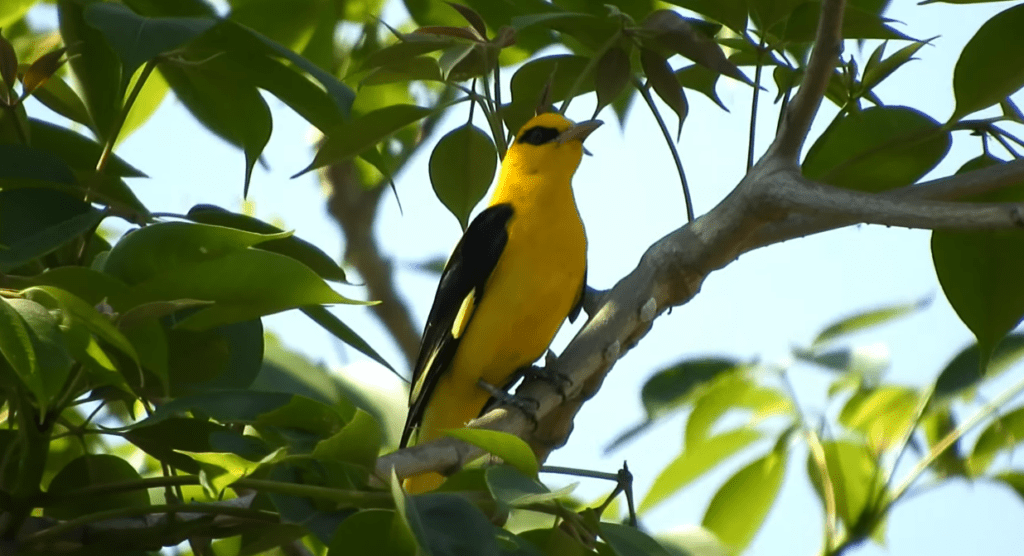
If you’re willing to go a little further into lowland and foothill forests, you can find the Yellow-bellied Whistler (Pachycephala philippinensis). This is a unique bird to the Philippines that doesn’t get much attention but probably should. Its back is yellow and its wings are brown. It has a white throat and a high-pitched, slurred whistle that birdwatchers say is pretty easy to recognize once you’ve heard it. This bird is smaller and quieter than the oriole. It’s not the kind that gets a lot of attention, but the kind that you remember after spending the morning listening carefully in the right part of the forest.
Another small yellow species that lives in Manila’s parks more often than most people know is the Golden-bellied Gerygone. It’s small, restless, and moves quickly through the leaves. This is the kind of bird that new birdwatchers call “something yellow” until they learn to slow down and look more closely. Along with the sunbird and the bulbul, the Wild Bird Club of the Philippines says it is one of the most common birds in the metro. This shows how much biodiversity there is in places that most people use for decoration rather than habitat.
When you watch these birds, you get the sense that the Philippines is doing some things right and not nearly enough in other areas. The species that have changed to live in parks and gardens seem stable and even doing well. There is a different kind of pressure on species that depend on forests. These species are endemic, have limited ranges, and are less tolerant of disturbance. Over the next ten years, whether that pressure goes down or up will likely depend on the decisions that are being made right now about what to build and what to leave alone. There are still yellow birds here. You should pay attention to that before it stops being true.
