


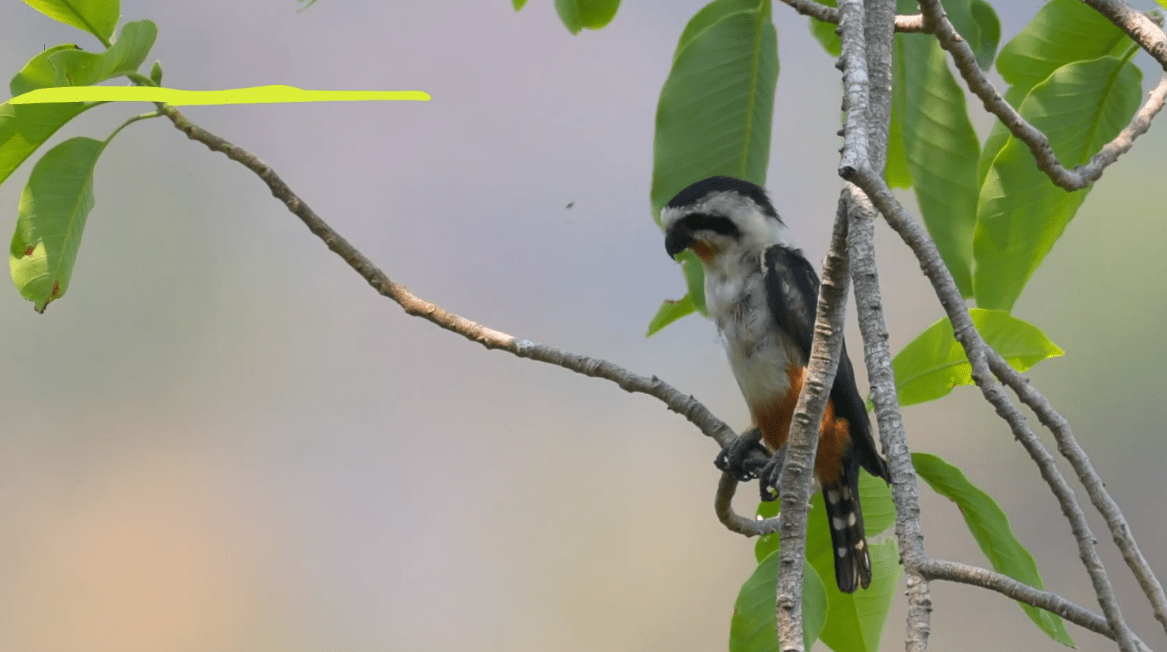
When most people think of a falcon, they picture a bird with wings that are big enough to shadow a rabbit and that dives at angles that don’t make sense. The falconnet is not that kind of bird. It’s about 35 grams heavy. That’s about the same as a bunch of grapes. Still, it is definitely a bird of prey.
Microhierax is the genus name for the falconet. The name comes from the Greek and means “tiny hawk.” The group is made up of five species, and all of them live in South and Southeast Asia. The collared falconet lives in India, Nepal, Bangladesh, and parts of Southeast Asia. From Malaysia to Indonesia to Singapore, you can find the black-thighed falconet in their forests. This bird, the white-fronted falconet, lives almost entirely on the island of Borneo. The pied falconet lives in a corridor that goes from northeastern India to southern China. The Philippine falconet, Microhierax erythrogenys, is only found in the lowland forests of the Philippine archipelago. It is not found anywhere else in the world.
When it comes to size, the falconet bird is very small compared to other raptors. Its wingspan is only 14 to 18 centimeters. It’s about the size of a sparrow, which makes its behavior really strange the first time you see it. These birds hunt dragonflies, beetles, grasshoppers, and other big bugs, as well as smaller birds, and sometimes they go after prey that is about the same weight as them. For example, munias and small warblers have been seen being eaten by the collared falconet. Something about seeing a bird the size of your thumb pin down another bird changes the way you think about what “small” means in nature.
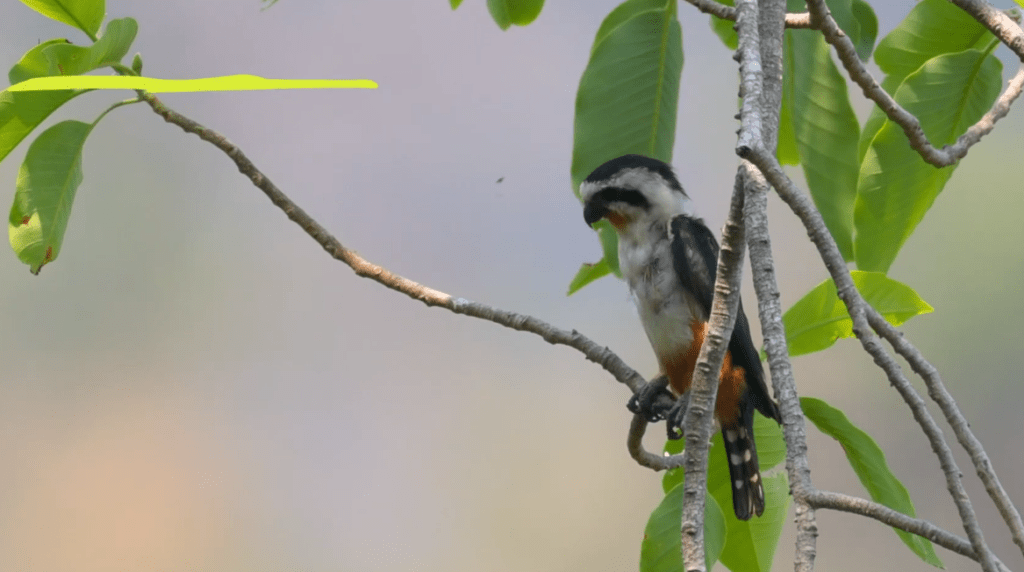
The description of the body is important to think about. The collared falconet has a white collar, a rusty red throat, and a long dark stripe behind each eye that makes it look like a panda, according to one observer. The black-thighed falconet is darker all around and has white spots that stand out. The Philippine falconet is mostly black and white, with reddish patches on its cheeks. It is clean, sharp, and easy to spot once you see it. They don’t soaring like bigger raptors do when they’re in the air; instead, they move quickly and straight, like something that doesn’t want to waste energy it doesn’t have.
There is a history to the genus that is a little older than it seems. An animal that was found in Bengal in the 1700s made its way to London, where ornithologist George Edwards called it “the little black and orange-colored Indian hawk” in 1750.” In 1758, Carl Linnaeus officially put it into a category. In 1874, Richard Bowdler Sharpe came up with the name Microhierax. At that time, there were already four species known. A fifth bird, the white-fronted falconet of Borneo, was added by Sharpe himself five years after the first four. The genus was put together slowly, with real specimens being handled by people on the other side of the world. This gives the taxonomy a grounded quality that some more recent revisions lack.
When you read about these birds for a while, you get the sense that the falconet fills a niche that most wildlife news skips over. The eagles watch documentaries. In big cities, programs keep an eye on peregrine falcons from rooftops. If it’s lucky, the falconet gets a paragraph in a field guide. Not as many people are interested in smaller birds because people still think of raptors as big and scary. This is also partly due to geography, since lowland Southeast Asian forests aren’t the easiest places to go birdwatching.
The Philippine falconet is native to lowland areas that have been severely affected by deforestation. It’s possible that this bird species needs more conservation attention than it currently gets. “Least concern” is still a status that it has, but it is reviewed often, and lowland Philippine forests have not been getting better for decades. The falconnet is not in danger. But it’s the kind of bird whose situation is interesting to keep an eye on.
