


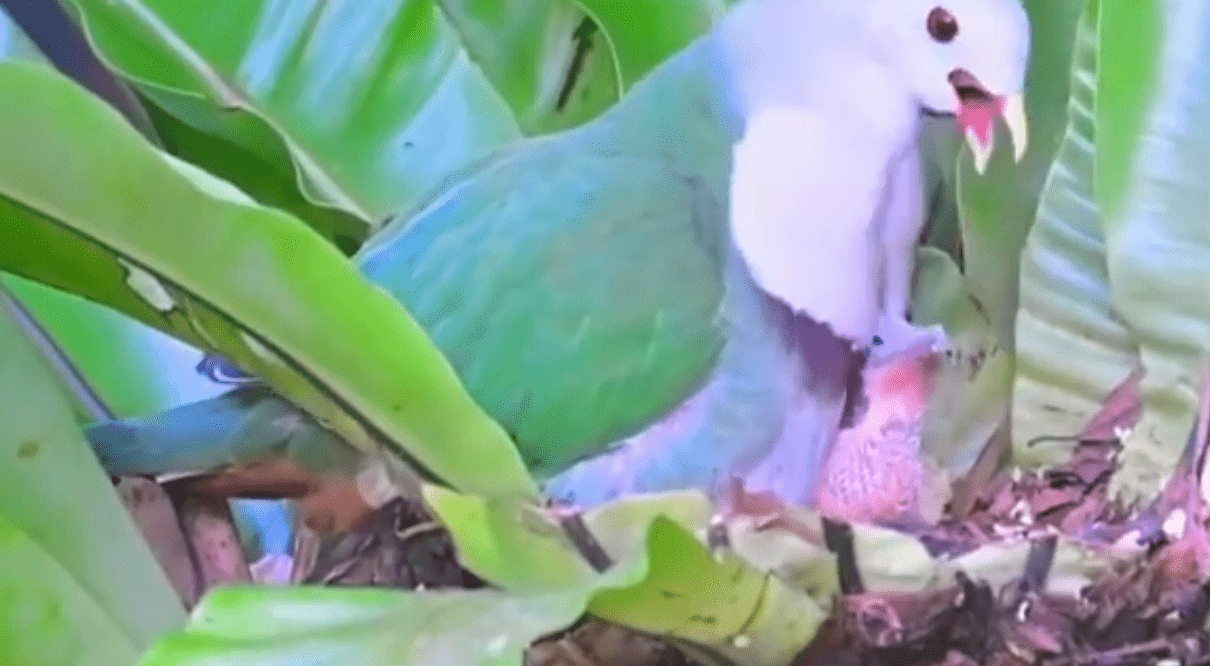
Serious birdwatchers have been looking for years for a sound in the forest above Alcoy in Cebu, which is about 750 meters above sea level. The black-chinned fruit dove makes a soft, slow call that is easy to miss or mistake for that of another bird. This particular fruit dove is native to the Philippine archipelago. The bird rarely does what you want it to do. People below are straining their necks up with binoculars, but the animal stays in the canopy and eats fruit.
Most of the time, Filipino birders don’t see flashy fruit doves like you might expect from birds with names like Flame-breasted or Yellow-breasted. Because they live in the canopy, you can only see them in bits and pieces—a flash of green or an orange—before they disappear into the upper levels of a forest that is getting harder to find. The yellow-breasted fruit dove is probably the most photographed of the group. It can be recognized by its green back, pale gray crown, and bright yellow breast that is balanced by a small maroon patch on its belly. The flame-breasted fruit dove is even more unusual. Its bright orange chest and dark pink crown make it hard to believe that this bird lives most of its life in the shade of a forest.
Both species can only be found in the Philippines and nowhere else. That status is more important than it looks at first. These birds have evolved to live in close harmony with the trees in the Philippine forests. They are directly linked to the health of the forests they live in because they eat fruit whole and carry seeds through the canopy. It’s rare for fruit dove populations to drop all at once.
There’s also the bird that’s in a different group. The Negros fruit dove, whose Latin name is Ptilinopus arcanus (arcanus means “secret”), has one of the scarier stories in the field of Philippine birds. One female bird was found on the slopes of Mount Kanlaon in 1953 by Filipino ornithologist Dioscoro Rabor. She was shot from a fruiting tree with another bird that was thought to be her mate but went missing in the bushes and was never found. It has been at the Peabody Museum of Natural History at Yale University ever since. Since then, there has been no confirmed sighting in more than 70 years.
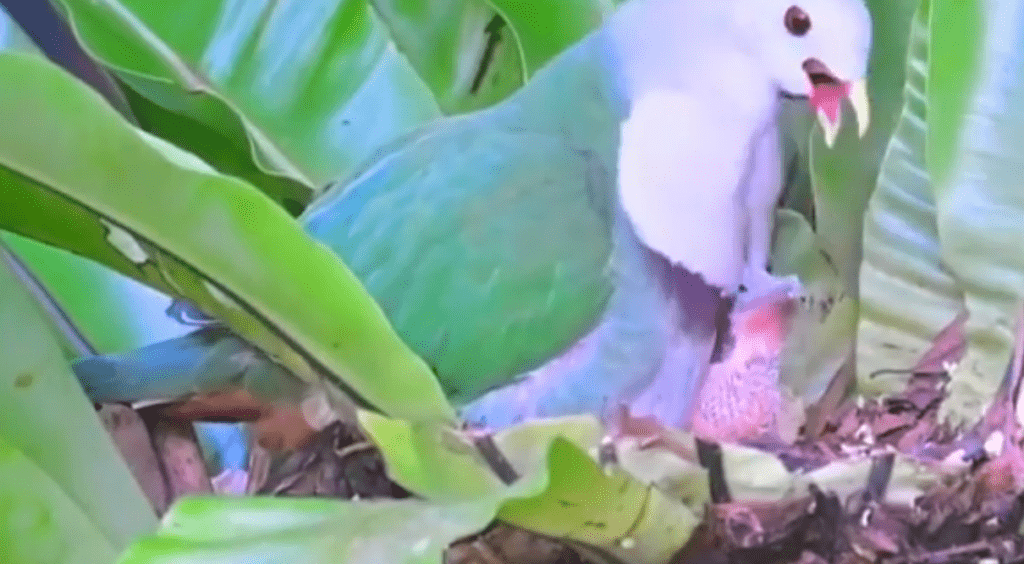
The bird was only 16.5 centimeters tall and had bright dark green feathers. Its forehead was ash gray, and around its eyes was a ring of bare yellow skin. When the bird was perched, the yellow edges on some feathers made it look like it had a wingbar. The throat was white, and the tail was yellow below. In any way you look at it, this animal is unique. Bird experts are very careful when answering this type of question, because the truth is that no one knows for sure. In southern Negros, a hunter said he had killed one in the 1990s. A DNA study released in 2024 confirmed that the Negros fruit dove comes from a very old lineage that split from its closest relatives almost 12 million years ago. This makes it even harder to believe that it might be extinct. The IUCN says it is Critically Endangered, which means that there are probably less than 50 individuals left in the wild.
The bigger picture of the lowland Negros forest is not good. In the northern part of the island, most of the lowland dipterocarp forest that the dove probably liked has been cut down. At 1,100 meters, the site where the specimens were collected in 1953 was probably already secondary habitat. The pair had probably been pushed upslope by earlier clearing of trees below. That pattern happens so often in the history of Philippine conservation that it seems like normalcy, which is a bad sign.
After reading all of this, I feel like the fruit doves of the Philippines show the full range of what island endemism can mean. They include species that are currently doing well enough in protected forests like Rajah Sikatuna in Bohol and species whose continued existence is truly uncertain by scientists. The bright ones in the canopy should be looked after just because. Still, you should look for the one from Mount Kanlaon.
