


A peregrine falcon nest that had been active for years is now empty somewhere on a cliff face in northern England, the kind of ledge that requires a rope and a certain kind of resolve to reach. The springtime hatchlings there failed to fledge. They did not scatter to create their own domains around metropolitan tower blocks or coastal headlands. They relocated to a market several thousand miles away that was willing to pay more for them than most individuals make in two years, all while hiding and using documentation that falsely characterized them.
Although the illegal trade of British peregrine falcons into the falconry markets of Gulf nations is not a recent issue, it is a chronic and poorly understood one. Poachers who are aware of active nest sites—finding a peregrine nest in a known habitat is not particularly difficult for someone who knows what to look for—take chicks at an age when they can survive removal but are young enough to imprint on handlers during early development. These basic mechanisms have been documented in enough wildlife crime investigations to create a general picture. After that, those chicks go thru a washing process that uses the presence of a respectable, legal captive-breeding enterprise as cover.
The transaction gets truly challenging to identify and prosecute when there is documentation fraud. Records of eggs deposited, chicks born, and birds produced are kept by licensed captive breeding facilities. When a wild chick is brought into a facility under license, it can be registered against the documented clutch of a breeding pair, obtaining documentation that certifies it as captive-bred. The bird can travel outside under the guise of legality thanks to that paper trail, which is submitted to CITES export authorities. It is unclear how common the technique is outside of the fifteen wild-origin birds that DNA testing revealed in UK spot-checks—a sample that, by definition, only represents what investigators happened to test—because the system requires cooperation from someone inside a licensed facility.
All of this is motivated by a particular logic of market desire. It is hard to overestimate the cultural significance of falconry in the Gulf states, especially the United Arab Emirates. The sport has been performed for thousands of years throughout the Arabian Peninsula, is acknowledged by UNESCO as an intangible cultural heritage, and serves as a major status symbol and a sincere interest in contemporary Gulf society. Bloodline, speed measurements, and physical conformation are all taken seriously by livestock breeders when evaluating birds used in elite racing and breeding contests. British peregrines hold a special place in that assessment: buyers believe that birds from wild UK populations have genetic traits linked to the harsh hunting conditions of the British uplands, and that perceived quality commands a premium over captive-bred alternatives that buyers believe have been genetically diluted by generations of managed breeding.
In reaction to media coverage of the illicit trade, the falconry industry consistently acknowledges the existence of crime on the periphery, emphasizes the legitimacy of the legal captive-breeding market, and pushes back against what trade organizations claim is an exaggeration of the issue. There is a legitimate, sizable, and legitimately separate market for captive-bred peregrines from the illicit nest-raiding pipeline, so some of that opposition is undoubtedly justified. However, for a commerce that is purportedly driven only by captive-bred supply, the 88 percent figure for UK peregrine exports heading to the UAE in 2023 is a startling concentration, and it’s the kind of figure that calls for a closer look at what’s truly traveling thru authorized export channels.
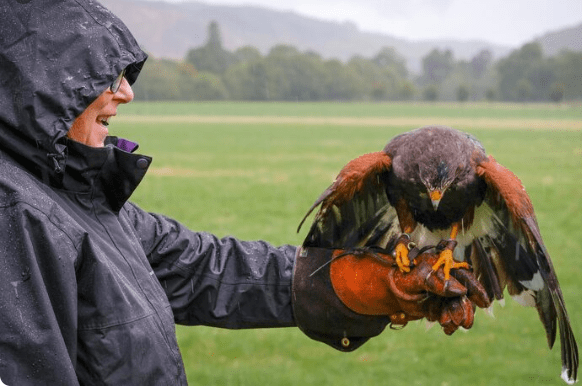
The typical challenges of investigating wildlife crimes are faced by UK wildlife police working these cases: witnesses are hard to come by, physical evidence is frequently lost or destroyed by the time investigators arrive, and DNA testing against a reference database that isn’t always thorough enough to be definitive is necessary to prove that a bird with valid documentation originated in a wild nest rather than a captive clutch. Someone chose to test, which led to the discovery of the fifteen birds found in spot-checks. The evidence at hand is unable to address the question of how many have not been tested.
