


Negros is a sugar-shaped island. The cane fields sprawl in all directions as you drive inland from Bacolod into the western side’s mountain foothills. This agricultural monoculture is so prevalent and long-standing that it’s easy to forget what the area was like before it. Nearly all of the lowland forest that formerly covered a large portion of Negros Occidental has disappeared. The Walden’s hornbill, one of the most endangered species in the Philippines and maybe the entire world, survives in the fragments that remain after being forced to the higher slopes and ravines where the cane machinery was unable to follow.
Even before you are aware of the bird’s conservation status, the bird itself demands attention. Walden’s hornbill, commonly known as the rufous-headed hornbill, has a strikingly large casque—a helmet-like structure—above its deep orange-red head. The bird is noticeable, noisy, and quite ancient-looking in a forest with sufficient cover to sustain it; it appears to have evolved before compromise. The issue is that the necessary forest has been reduced to patches, and those spots are encircled by land that has been continuously used for sugar cultivation for many generations.
Negros’ current conservation efforts are based on an improbable premise. For the majority of the 20th century, the sugar estates and the families who possess them were the main causes of the deforestation that led to the current status of species like Walden’s hornbills. Converting habitat to agricultural use, clearing forest for cane, and treating the surviving forest patches as low-value land were, for the most part, economically sound decisions made within the constraints of the period. Some landowners are beginning to realize that the forest remnants on their estates have worth that isn’t reflected in the cane price, but this is happening gradually and thru persistent relationship-building rather than conflict.
The most persistent local force in that change has been the Talarak Foundation, which has collaborated with private landowners, local government entities, and foreign partners, such as the RSPB, to establish a conservation network throughout Negros that is independent of the government designating land it does not control as protected. Negotiating buffer zone agreements with individual estates, conducting synchronized hornbill counts that necessitate coordinated effort across multiple properties, offering technical support to landowners willing to manage forest remnants more deliberately, and keeping a captive population at the Negros Forest and Ecological Foundation center as insurance against the worst outcomes in the wild are all examples of the approach’s practicality to the point of being unglamorous.
Because of the RSPB’s involvement, Negros has access to a larger worldwide network of financing and knowledge for conservation, which is difficult for smaller local organizations to obtain on their own. That relationship is important, but it’s important to understand what influences the situation locally. It’s the discussions that take place at the border of a sugarcane field between conservationists and farm managers, where someone is asked to think about the strip of secondary growth along the ravine as something other than waste land that needs to be cleared. These discussions don’t always go well. However, they are so successful that the hornbill population on Negros looks to be stable in some survey regions rather than continuing its prior decrease, even tho it is still critically small.
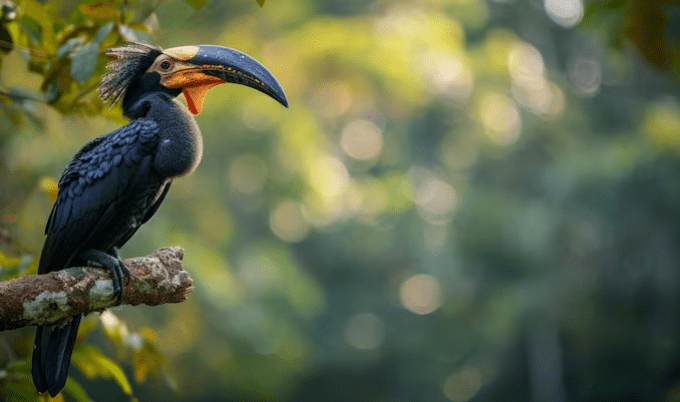
The very existence of this partnership is noteworthy. There are numerous instances in conservation history where wildlife organizations and agricultural landowners had been on opposing sides of a policy dispute for decades, building mutual mistrust that made effective cooperation all but impossible. Negros hasn’t completely broken free from that dynamic; there are still continuous conflicts about land use. However, the particular urgency of Walden’s hornbill situation—a species whose worldwide population is estimated to be in the low hundreds—creates a form of pressure that avoids some of the typical ideological conflict. People who care about a species are more likely to speak with anyone who might be able to help when it is so near to extinction.
