


The skies over Utah start to fill every spring. Eared grebes, Wilson’s phalaropes, American avocets, and egrets are among the seemingly unbelievable numbers of birds that pour in from the Arctic tundra and the tip of South America, navigating through desert air and mountain corridors to reach a single destination. The Great Salt Lake. For millions of them, it is the only meaningful stop on a cross-continental journey.
Every year, more than 330 species and over 12 million birds fly over the lake. Some stay for weeks, eating nonstop and gaining twice as much weight before continuing. In this lake, eared grebes can eat up to 30,000 brine shrimp every day. The math of migration just doesn’t work without that fuel.
The lake’s failure to fulfill its end of the bargain is the issue. Water has been drawn from the lake more quickly than it can replenish due to decades of upstream water diversion for cities, agriculture, and the general thirst of a developing region. The surface has drastically decreased. The salinity has increased. Additionally, the brine shrimp and brine flies, which are at the base of the food chain and are essential to the functioning of this ecosystem, are under severe stress.
For parts of his career, Kyle Stone, a biologist with the Utah Division of Wildlife Resources, has counted birds in the wetlands surrounding Ogden Bay. In recent seasons, he’s noticed something disturbing. Birds that used to stop at California’s Salton Sea, another saltwater lake that has largely dried up, are now showing up in Utah. A crisis they did not cause has diverted them, and they have arrived at a lake that is getting smaller. “Used to be a lot of those birds were going to the Salton Sea,” Stone has said. “Now that the Salton Sea is mostly dry, that’s no longer available to them.”
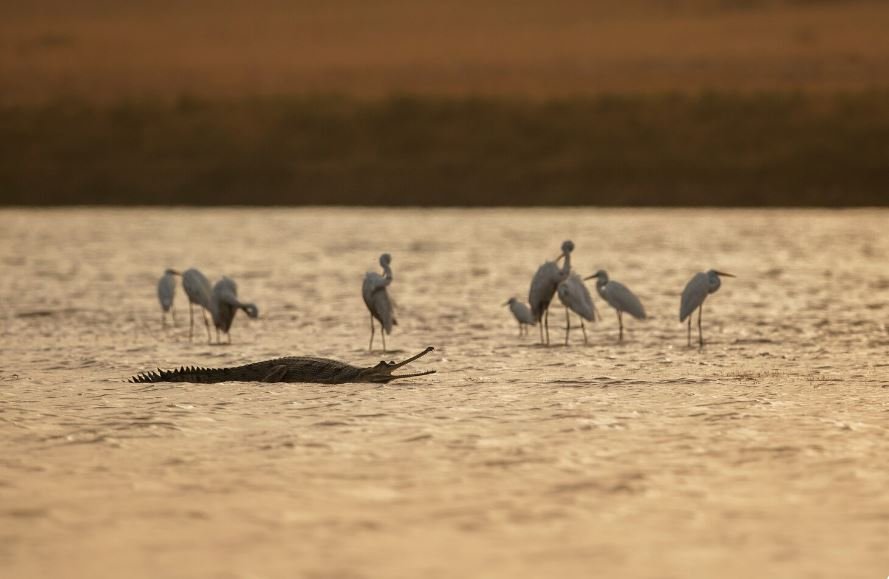
One could view this with cautious optimism. The Great Salt Lake bird count hasn’t completely collapsed. In fact, the numbers of some species have increased. However, that is a warning sign rather than a sign of comfort. Displaced birds have nowhere else to go but here as smaller saline lakes throughout the Great Basin vanish. The amount of food available is actively decreasing, and more birds are vying for it. Over the last ten years, the number of eared grebes at the lake has nearly tripled. Disease is made possible by that density. In recent years, avian flu and avian botulism have killed thousands of grebes. Raptors that consume sick birds have also become ill and perished.
It’s a grimly practical comparison that keeps coming up among researchers. According to John Luft, who oversees the Utah Division of Wildlife Resources’ Great Salt Lake Ecosystems Program, the situation is similar to traveling from Salt Lake City to Wendover with the expectation of filling up at the only gas station along the way, only to discover it is almost completely empty. You are unable to conjure an alternative. It doesn’t exist.
Utah is not the only place where saline lakes are losing ground due to overuse and climate change. Over the past 30 years, Lake Urmia in Iran has decreased by about 80%. Lake Poopó in Bolivia has all but disappeared. Decades ago, an aqueduct dried up Owens Lake in California. The ducks, flamingos, and egrets that used to feed here are no longer present. They leave behind rust and salt flats. That threshold has not yet been crossed by Great Salt Lake. However, there is a limited window of opportunity to avoid it.
Utah has made some progress. a trust for wetland habitat worth $40 million. Together with federal agencies, a water strategy was created. A USGS program to monitor saline lakes was funded by Congress. These efforts are genuine and significant. However, none of them supply water to the lake itself, and policy documents or monitoring programs cannot take the place of water.
As usual, the birds will continue to arrive this autumn. The lake seems to retain enough memories of its past to entice them, at least temporarily. People in Utah may be running out of time to respond to the question of whether it will actually hold enough water to feed them.
