


A big bird moves silently through the branches deep in the southern Philippines’ forests, where the canopy is thick enough to block out daylight. It doesn’t make many calls. It doesn’t stay in public areas. The world that the Palawan Hornbill and its critically endangered cousin, the Sulu Hornbill, inhabit has been getting smaller for decades due to land conversion, logging, and the gradual degradation of the forest habitats that these birds depend on.
The lack of attention this crisis receives outside of birding circles is almost bewildering. Anthracoceros montani, also known as the Sulu Hornbill, is one of the rarest birds on the planet, not just in the Philippines. Between 20 and 40 mature individuals are thought to remain in the surviving wild population. From twenty to forty. When you consider that figure, you realize that it is a countdown rather than a conservation statistic.
Wild figs, the fruit these hornbills rely on for survival, are abundant in the small area of primary forest in Panglima Sugala, Tawi-Tawi, where the last known population still exists. However, that forest is under stress, and most people believe that even in its current condition, it isn’t big enough to sustain a rebounding population. These areas are now patrolled on foot by local rangers who were recruited from nearby communities. They keep an eye on the known hornbill locations, deter casual tourists, and report any indications of human interference. For the time being, the local government unit has made the difficult but likely necessary decision to completely bar tourists, photographers, and birdwatchers from the site.
Who is providing the protection is what makes this situation truly intriguing and perhaps even encouraging. These are not contracted conservationists who have been flown in from the capital. Many of the rangers who patrol these forests are locals with generational ties to the land; to them, the hornbill is an integral part of their upbringing rather than a symbol of biodiversity targets or grant applications. It appears that this connection is important. Even though the Tawsi Conservation Program is still underfunded and vulnerable in its current state, there is a quiet seriousness to its operations.
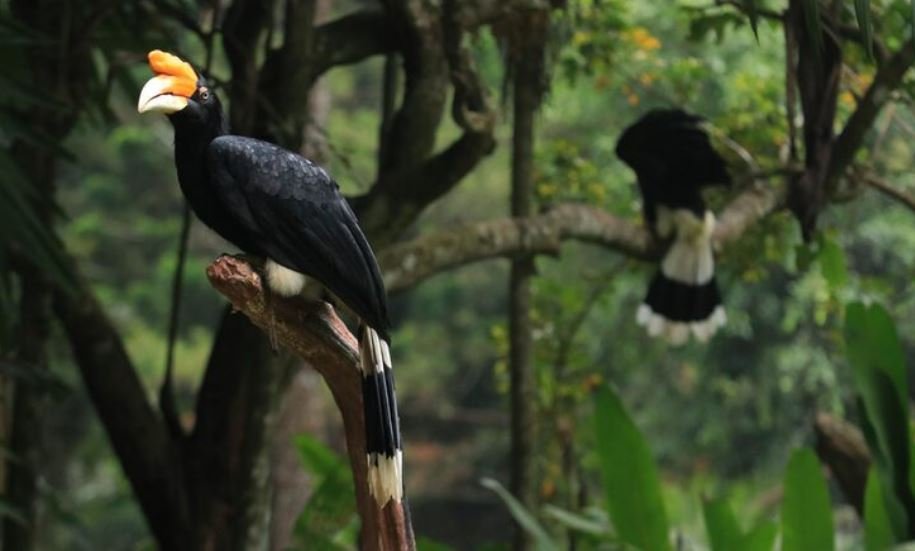
A more significant obstacle to conservation in the archipelago is the Palawan Hornbill, which is classified as Vulnerable on the IUCN Red List. This species, which is native to Palawan, the long, narrow island province sometimes referred to as the Philippines‘ last frontier, has seen a steady fragmentation of its forest habitat. Four Palawan Hornbills were transferred from the Palawan Wildlife Rescue and Conservation Center to the Katala Institute at the beginning of 2024. This was a minor but significant step in captive breeding efforts, which scientists hope will act as a buffer in the event that wild populations continue to decline.
It’s still unclear if these efforts will be sufficient or if they’re coming too late to have a significant impact. Such conservation initiatives depend on consistent funding, community support, and political will, all of which are critical in a nation handling dozens of conflicting biodiversity crises concurrently. The hornbill’s predicament is genuine, and those who are addressing it are putting in a lot of effort. However, from the outside, it appears that there is virtually no margin for error.
The forests of Palawan and the Sulu Archipelago appear to contain something truly unique. During the brooding season, the female hornbill hardly leaves the sealed tree hollows where it nests and raises its young while moving through the canopy in almost complete silence. No conservation category can quantify how long it has lived here. More than anything else, it may depend on the rangers who walk those forest paths and whether or not the rest of us pay enough attention to make their work worthwhile.
