


A screen just cannot match the feeling of holding a large-format photography book. The weight of it. When a photograph is printed at scale, it makes you slow down. That’s precisely what Paul Nicklen’s Reverence, published by Hemeria and scheduled for release on July 28, which happens to be World Conservation Day, is. It reads more like a career in physical form than a coffee table book, compiling 160 photos from over thirty years of work in some of the world’s harshest environments.
Only a few hundred miles from the North Pole, Nicklen was raised in an Inuit community. That particular detail is more important than it may appear. He is not speaking as an outsider who parachuted in for a dramatic assignment when he talks about polar ice or describes discovering two young polar bears dead on the shores of Svalbard—starved, not old. He is aware of the intended appearance of that landscape. He is also personally aware of what it is losing.
Contrary to its polar reputation, the retrospective covers a much wider geographic area. The book travels across continents and ecosystems without losing its internal coherence, from the root-like channels of the Colorado River delta to narwhals consuming Arctic cod off Baffin Island, from emperor penguins traversing a fractured glacial shelf to a lion perched like a stone sentry on a rocky kopje in Tanzania’s Namiri Plains.
Nicklen consistently treats wild animals as individuals rather than subjects, which is what keeps it cohesive rather than a theme. In the pictures, you sense that. His compositions exhibit a certain level of attention that transcends technique.
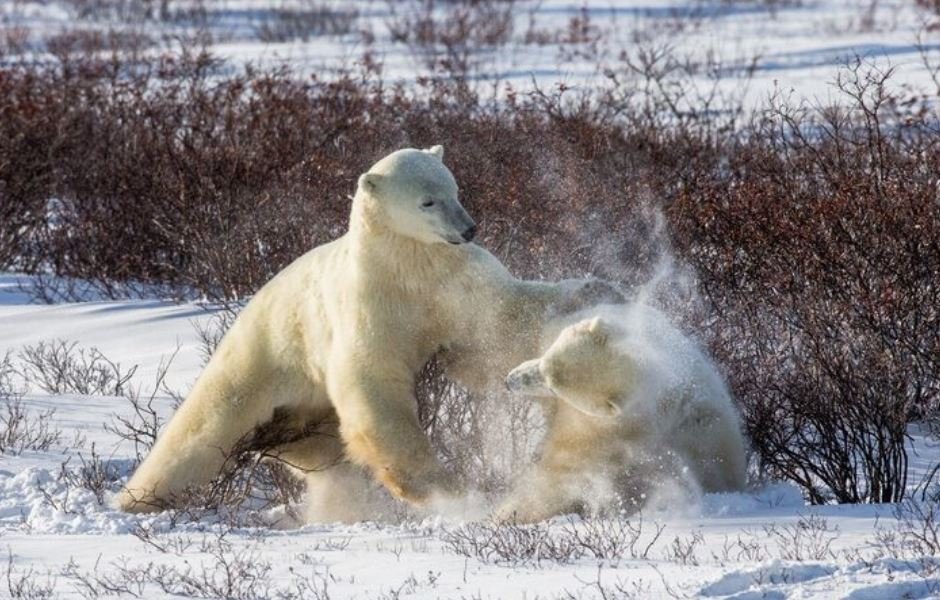
The introduction of Reverence, which is written from “Mother Earth’s” point of view, seems to have the potential to become sentimental but manages to avoid it. Because Nicklen has earned it, the framing is effective. From someone who has spent thousands of hours in freezing water just to get within inches of an apex predator, the text strikes a different chord when it speaks directly to the reader, saying, “This is your home, your one, wild, irreplaceable home.” This isn’t a photographer trying to sell you a poster. It is a person who has witnessed the ice melt in real time and has decided that photography is the most truthful way for him to make his case.
Even though Nicklen himself prefers to concentrate on the animals rather than the suffering, the technical requirements that went into these pictures should be acknowledged. Working in polar waters requires underwater housing, close proximity for wide-angle lenses that most people would find frightening, and pushing your body through potentially fatal conditions. He has described the risk of hypothermia as an ongoing, controllable calculation. When he talks about risk, he exudes a professional calm that seems less like arrogance and more like the mindset of someone who has just determined what is important to him.
Nicklen has been clear about the motivation behind his work as co-founder of SeaLegacy, the nonprofit organization he founded with photographer Cristina Mittermeier for marine conservation. His photographs’ beauty is not coincidental; rather, it serves as a gateway.
In order to break through the numbness that develops when people are exposed to too much bad news and have nothing to cling to, he has described his aesthetic choices as a purposeful emotional hook. It’s still genuinely unclear if that tactic is effective. The ice is still melting. However, Reverence’s arrival at this specific moment feels more like a document than a celebration—careful, leisurely, and truthful about the stakes.
