


In Bristol, England, a small forest is developing on the perimeter of a parking lot. It hardly covers the area of several shipping containers. Nevertheless, the branches within it were teeming with goldfinches on a chilly October morning. It’s the kind of detail that sticks with you because it subtly reframes what conservation is meant to look like rather than because it’s dramatic.
Scale has been the prevailing concept in wildlife protection for decades. Preserve the Amazon. Keep the Serengeti safe. Construct transcontinental corridors. These objectives are important. However, a more subdued body of evidence has been gathering somewhere in the urgency of thinking big, suggesting that small, intentional habitat patches can accomplish more ecological work per square meter than nearly everyone anticipated.
According to ecologists, micro-habitats are distinct areas within a larger environment that have unique conditions. A decaying log. A dense grass patch next to a drainage ditch. A roadside strip of native shrubs. They appear insignificant on their own. Together, they serve as lifelines for species that have been forced out of larger landscapes, particularly when they are positioned with some ecological intent. These pocket-sized areas seem to be very important for birds in particular, species that are extremely sensitive to vegetation structure, food availability, and safe nesting cover.
According to research from Southern Portugal, when the microhabitat conditions are right, even road verges and field margins—habitats that most people pass by without noticing—can support endangered species. The study discovered that marginal areas in agricultural landscapes frequently contain more biodiversity than the managed land surrounding them. The study used satellite imagery to map habitat suitability for the endangered Cabrera vole. The idea is applicable to birds as well. Small, structurally complex patches of vegetation have been found to be crucial for the movement, foraging, and refuge of mixed-species flocks in fragmented landscapes, particularly outside of officially protected areas.
A similar phenomenon has been observed in American cities by the National Audubon Society. In urban areas, micro-forests—some no bigger than a few parking spots—are being planted specifically to provide birds with a place to land. Wider replication has been prompted by the encouraging results. These installations provide something that seems almost paradoxical in urban areas where green space is expensive and contested: significant ecological return on relatively little land.
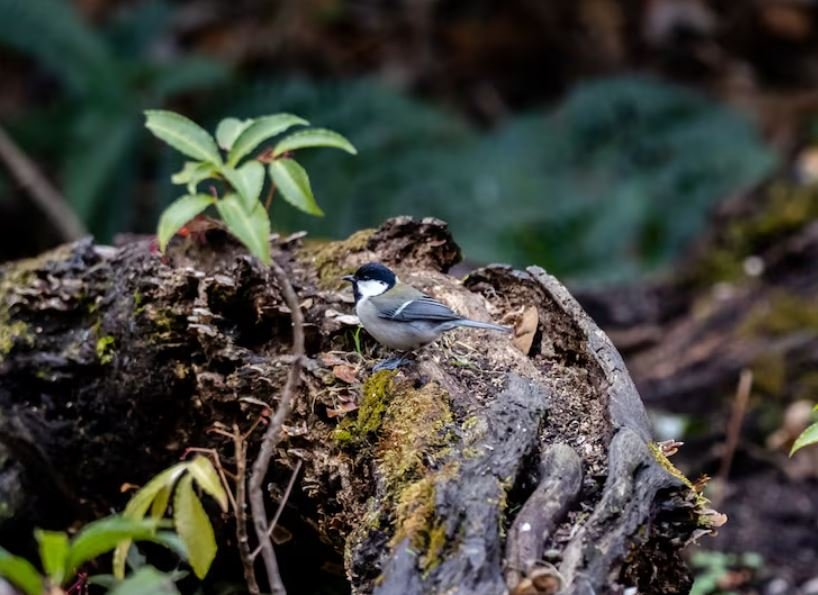
This is made possible in part by structural complexity. The presence of food-producing plant species, litter depth, and branch biomass all influenced which species could coexist in a particular patch, according to researchers studying small mammal populations in Brazil’s restored riparian forests. There were more species when there was more structure. For birds, the same reasoning holds true. A patch of seeding grasses, a layer of shrubs, or a tangle of dead wood can all create the niches that various species require at different stages of their lives. In contrast, a well-kept green area provides very little.
Micro-habitat work is sometimes viewed in conservation circles as a consolation prize, something you do when you can’t protect the big stuff. It seems harder and harder to defend that framing. The “big stuff” is frequently unavailable in heavily altered landscapes, which currently encompass most of the temperate world. There are edges, margins, pieces, and remaining corners. For many endangered regional populations, it may be more practical to deal with the current situation rather than waiting for perfect circumstances.
It’s still unclear how important connectivity is in these systems and whether birds benefit more from linked networks of patches than from isolated microhabitats. Researchers are actively addressing that genuinely open question. The ability of a single well-structured pocket of habitat to significantly alter local bird diversity appears to be less debatable. Considering the direction that bird populations are taking worldwide, that is not a minor issue. More and more of the evidence is inscribed on the tops of tiny forests.
