


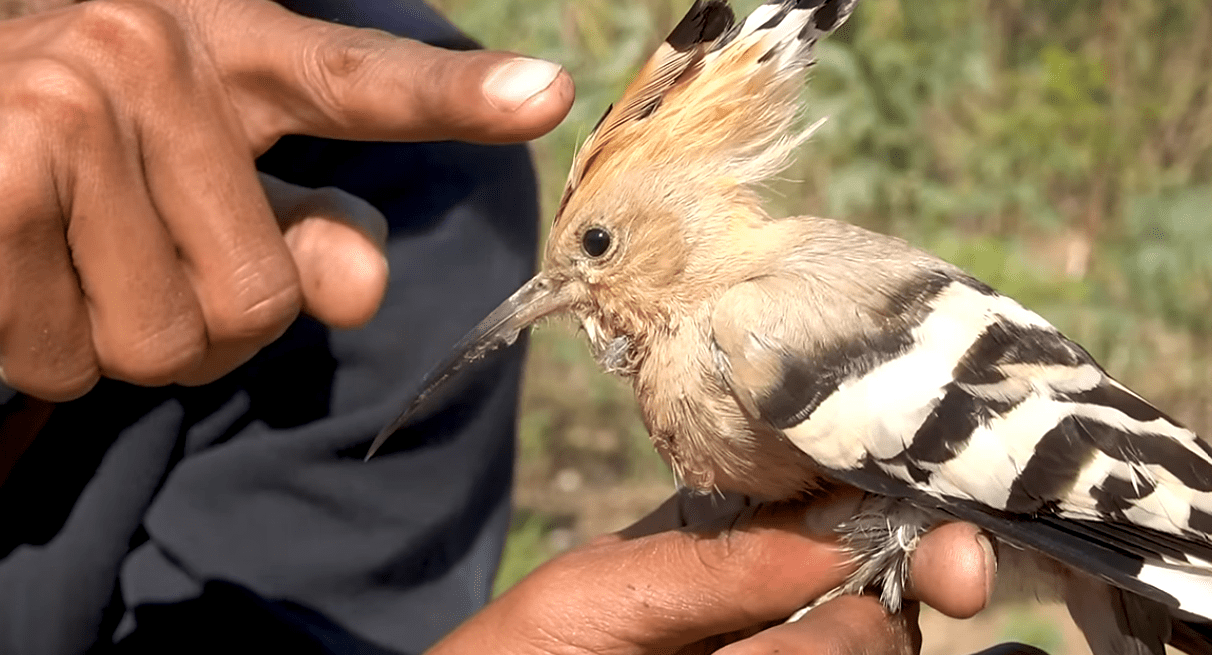
The hoopoe sounds like it could be used in a play. The body of cinnamon. The fan of black-tipped feathers that came out of its head like a crown during the performance. With a kind of focused patience, the long, curved bill dug into the ground. It’s hard not to stop walking when you see one for the first time, up close and in the open. The scene seems to be a mix of a fairy tale and a natural history museum.
The scientific name for the hoopoe is Upupa epops. It lives in Europe, Asia, and Africa. For thousands of years, people have watched, worshiped, feared, and puzzled over it. In most of its range, it is the only living member of its family. Just that makes it important to pay attention to.
In 2008, 155,000 people in Israel voted to make it the country’s national bird. It won by a large amount. People from Israel call it “Duchifat.” The Arabic word is “Hudhud.” It brings a message from the land of Sheba to King Solomon in the Quran. The scene is so clear that scholars still write about it. The Torah also talks about it, but not in a good way. It says that because it smells bad, it should not be eaten. That smell needs to be talked about.
The female hoopoe makes a dark, smelly secretion from her preening glands during breeding season. Most people say it smells like meat that has gone bad. It gets on her feathers and eggs and she rubs it in. The nest itself gathers waste and feces. If something gets too close, the chicks can squirt waste at it. By any reasonable measure, it is an amazing way to defend yourself, and it must work because the species has been around long enough to show up in Egyptian tomb paintings. How far away you are will probably determine whether you find it admirable or disgusting.
Because of all the myths, it’s easy to forget how strong and agile the hoopoe really is. It carefully walks across open land in search of food, digging its long bill into the ground to get mole crickets and beetle larvae. It can get stones out of the ground. It can make tree bark flake off. When it needs to catch a swarm of bugs, its broad, round wings with big black and white zebra stripes let it fly quickly through the air. During migration, hoopoes fly across the Himalayas. During an early Everest expedition, one was seen at about 6,400 meters. The bird in question is not weak. That is a hard question.
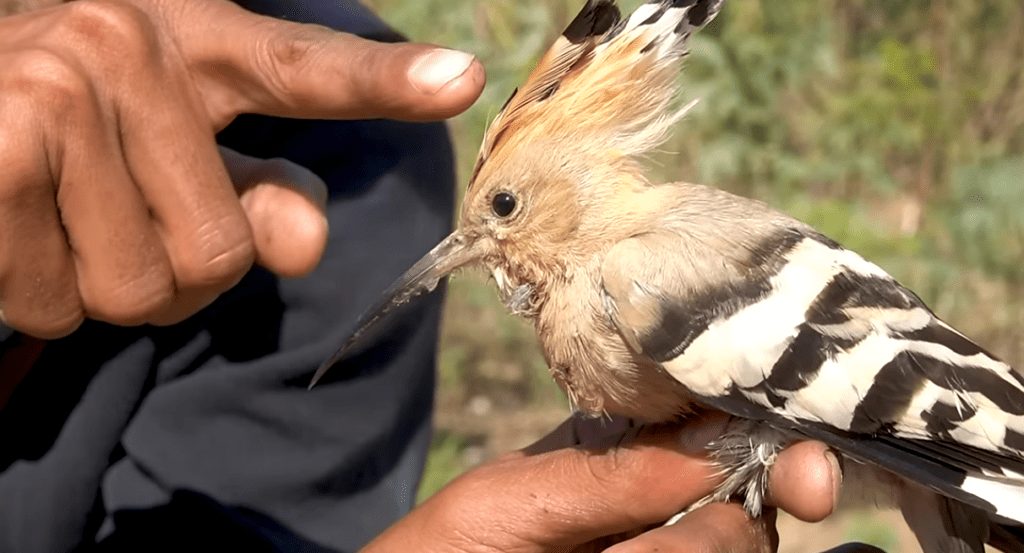
The hoopoe has meant different things in different cultures, depending on where you stood. It was a sign of virtue in ancient Persia, and the great poet Attar saw it as the wise leader who led all the birds on their spiritual journey. In ancient Egypt, it was holy and was used to show that a child would be the heir to the father. In Scandinavia, seeing one was a bad sign that war was coming. In Estonia, its call was thought to mean death. It was different in France. They said that if they heard a hoopoe before the vines bloomed, they would have a good wine harvest.
It’s hard to think of many birds that have made people feel such strong emotions. It is a sign of war in one country and plenty in another. It was holy in Egypt but horrible in some parts of the Torah. In Persia, it was linked to demonic magic in Germany in the Middle Ages. The needs of people from the hoopoe changed, not the hoopoe itself.
The IUCN now lists it as a species of “Least Concern,” but the number of them in Western Europe is going down. Some people in Central Europe are really under a lot of stress. To eat, it needs open, lightly vegetated ground, and to nest, it needs holes in trees or walls. Intensive farming puts pressure on both, and the hoopoe has to deal with the same farming forces that have wiped out many other species that seemed to be here to stay.
When you watch the hoopoe, you get the sense that this bird has been around longer than empires. It showed up in Egypt before the pyramids were built. In Islamic tradition, it went on trips with Solomon’s court. It made its way into the plays of Aristophanes and the poems of Ovid. As a stray, it showed up in Alaska after crossing Himalayan passes. It has made people doubtful that any one century will be the last one. This is true no matter what comes next.
But people likely thought that before the dodo as well.
