


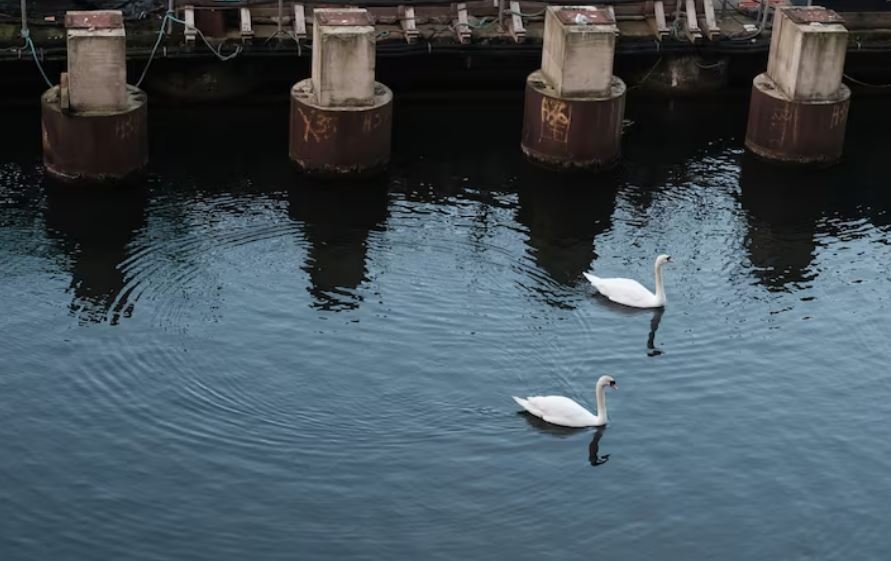
Observing a swan die is unsettling in some way. They glide through the water with an effortless serenity that gives them a sense of permanence and elevates them above the typical laws of nature. This is one of the reasons why what transpired at the West India and Millwall docks in late February left such a lasting impression on those who saw it, and it soon attracted attention well beyond the east end of London.
Over the course of a few days, over thirty dead swans were discovered in the waterways surrounding London’s Docklands. This led to an immediate investigation by the Animal and Plant Health Agency and a public outcry that spread nearly as quickly as the suspected virus. The highly pathogenic strain of avian influenza, H5N1, which has been decimating wild bird populations throughout the UK since 2021, was identified by Defra by late February.
This outbreak felt different from those that occur in more sedate, isolated areas of the nation because of the Docklands location. The docks are next to office buildings, apartments by the river, and busy pedestrian walkways. For thousands of Londoners who pass them on their way to work, pause to observe during lunch, or bring kids to feed the birds on the weekends, these swans were not far-off wildlife. Children seeking an afternoon outing were instead discovering dead birds when carcasses began to pile up along the water’s edge. Even though it seems insignificant, that detail reveals how close this was.
ITV News was informed by eyewitnesses that birds collapsed in a matter of minutes. In ten minutes, one person claimed to have witnessed about fifteen swans perish in front of them. The size and speed of this outbreak felt different, according to Andy Miller, a volunteer at the Swan Sanctuary who has previously dealt with bird flu outbreaks. “We’ve had other outbreaks of illnesses, bird flu,” he said to reporters, “but this has taken more than 30 so far.” Younger birds appeared particularly vulnerable, he observed; cygnets born earlier in the spring were particularly hard hit by a strain that he described as “very lethal and infectious.”
A specialist contractor was brought in to remove carcasses, and the Canal & River Trust, which oversees the region’s waterways, asked people to stay put. Under its dead wild bird surveillance program, APHA started an investigation. Everyone has consistently and unequivocally advised against touching dead or obviously ill birds, keeping dogs away from the water’s edge, and thoroughly washing hands after coming into contact with feathers or droppings. Anyone who spots more casualties can call Defra’s helpline.
Those on the ground found the situation more difficult because they felt powerless to make any significant interventions. “There’s no real prospect of being able to do anything,” Miller stated bluntly. The worst thing is that. Feeling helpless is the worst thing. Seeing these birds perish in large numbers without a workable cure is a unique kind of challenge for rescue volunteers who have dedicated years to trying to save them.
Here, it’s important to maintain some perspective. According to the UK Health Security Agency, there is still very little risk to human health from H5N1 in situations like this, and the NHS guidelines are more concerned with limiting contact with infected birds than with raising public awareness. While bird flu that affects wild waterbirds close to an urban waterway is concerning for wildlife and public awareness, it is not the same as a situation where people walking by are directly in danger.
However, the Docklands cluster serves as a reminder that bird flu is not limited to isolated estuaries or marshes. The birds are followed by it. And the birds follow the water wherever it is, even through the heart of one of London’s busiest areas, right in front of the glass towers of Canary Wharf. The numbers are verified, the investigation is still in progress, and it is difficult for anyone who frequently strolls along those docks to ignore the lack of swans on the water.
